
ॐ असतो मा सद्गमय तमसो मा ज्योतिर्गमय मृत्योर्मा अमृतं गमय ॐ शान्ति: शान्ति: शान्ति: 🙏
Om asata ma sadgamaya tamaso ma jyotirgamaya mrityorma amrutam gamaya
Peace: Peace: Peace:
Meaning: May the light of truth be found in darkness and falsehood, and the gift of immortality in death! O peace come come come!
Answer to What is Pranayama Yoga?
Table of Contents
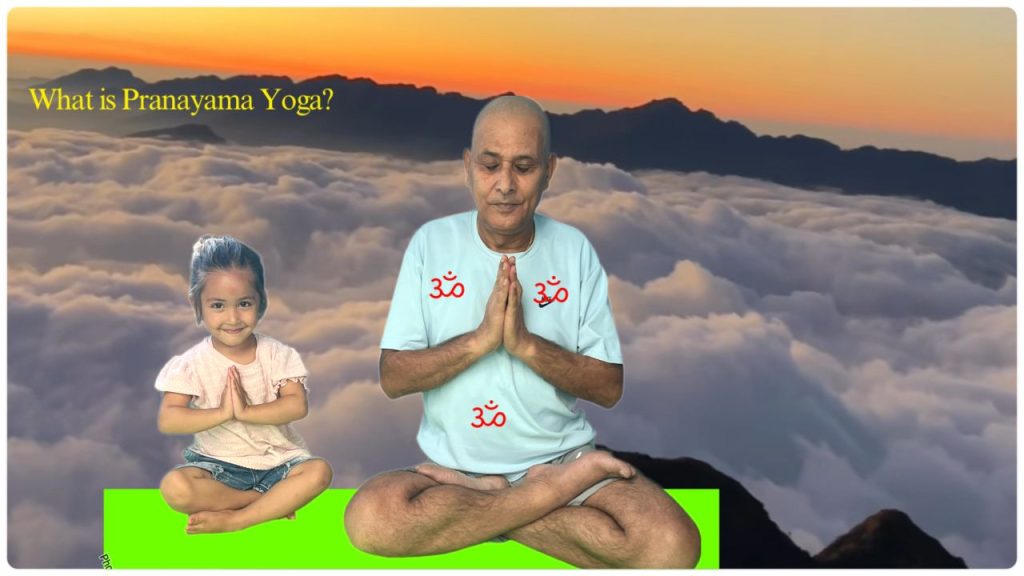
Pranayama means control of life. The word “Pranayam” comes from Sanskrit and means life = breath and yama = control. Pranayama yoga is the disciplined act of breathing. Pranayama helps to replenish the lack of oxygen in the body and also keeps our mind stable and calm. Clean life air ( oxygen )and systematic and controlled breathing make life healthy and long. In ancient times, the life span of sages used to be long and in the present era also, the importance of Pranayama Yoga practice is more.
Importance of Pranayama
Pranayama is very important for making human life healthy and long. Adi Shankaracharya in his commentary on Shwetaswat Upanishad says, “Through Pranayama yoga, the mind is purified from impurities and becomes fixed in Brahman. The body remains healthy, that is why Pranayama is mentioned in the scriptures.” If the work is done, everything from the atom to the great sun is under his control. The goal of Pranayama is to gain the power to subdue nature.
I would like to present the importance of Pranayama Yoga in a point-by-point manner.
A • Helps to calm the mind. Reduces anxiety, anger, stress, greed and maintains mental balance.
B • Controls and activates breathing and improves health by balancing the supply of oxygen in the body.
C • Activates concentration and attention, which helps in increasing concentration in studies and work.
D • Increases immunity, makes the lungs, heart and nervous system more active.
E • Improves and activates blood circulation and circulates clean and sufficient oxygenated blood to all parts of the body.
F • Regulates the sleep system and reduces insomnia and restlessness.
G • Maintains physical and mental cleanliness and balance, which makes mental energy strong.
H • Keeps spiritual and mental emotions under control, thus maintaining patience and tolerance, and developing positive thinking.
I • Spiritual awareness develops, thus maintaining self-awareness and inner peace.
J • Reduces the difficulties and effects of old age, thus helping the body to remain young and fit.
Different types of Pranayama
Pranayama has been classified according to the Vedic Sanatan Yoga Pranayama and Patanjali Yoga Pranayama methods. It is suitable to perform various pranayama to maintain peace and prevent diseases in different states of human health. The main and effective pranayama that have been practiced since ancient times are- 1. Anulom Vilom, 2. Bhramari, 3. Kapalbhati 4. Bhastrika 5. Ujjayi, 6. Sheetali, 7. Shitkari, 8. Surya Bhedi, 9. Chandra Bhedi. I would like to explain them in detail below.
1 Anulom Vilom Pranayama
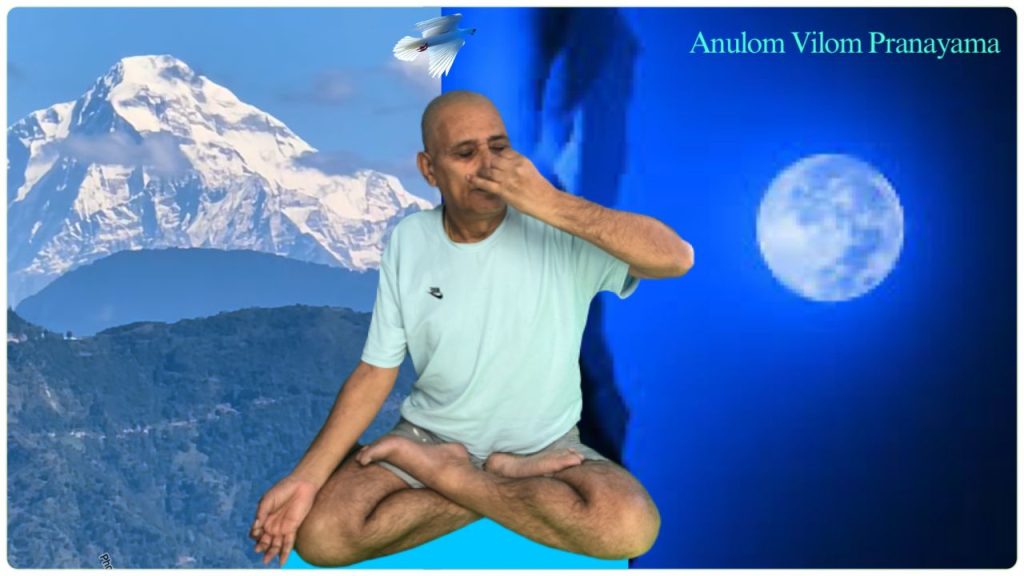
Anulom Vilom means inhaling and exhaling alternately through the right and left nostrils. In ancient times, sages learned this through practice and research and wrote books stating that it is beneficial for all people. The main benefits of doing this pranayama are – This pranayama makes breathing regular and active, balances the nervous system, controls stress and keeps the mind calm and stable.
2 Bhramari Pranayama
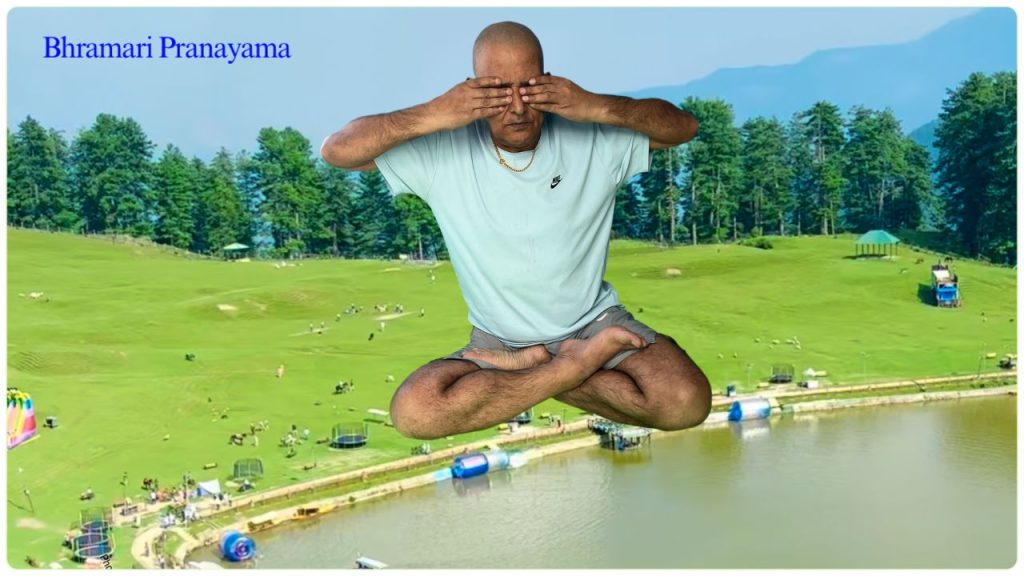
Bhramari Pranayama is the act of sitting in a comfortable position, closing the eyes and mouth and making a sound like a bumblebee through the nose.
• Benefits:
Bhramari pranayama Controls mental stress. It also controls throat diseases, tonsils, thyroid and phlegm. It is helpful in solving voice related problems. It also has a positive effect on the sleep system. It helps in controlling anger and keeping the mind calm at all times.
3 Kapalbhati Pranayama
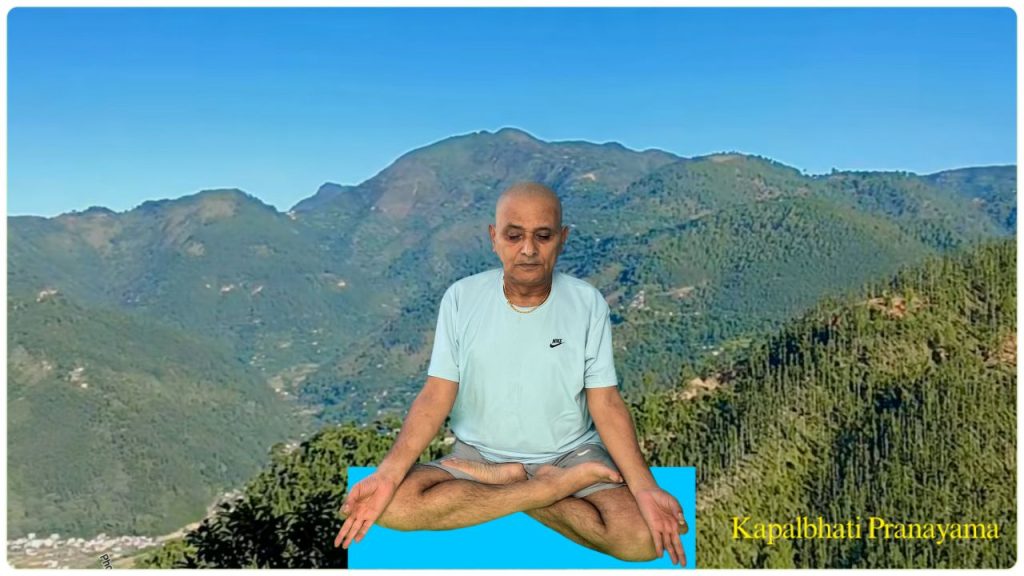
The literal meaning of Kapal Bhati is “Kapal” meaning head and “Bhati” meaning to make light.
• Benefits: While doing this pranayama, while inhaling and exhaling, the excretory organs are repeatedly contracted, which exercises these organs and keeps them healthy. It also activates the mind, improves digestion, and keeps the mind calm. Kapalbhati Pranayama helps to keep diseases that can affect the liver and kidneys away.
Its practice is necessary for both physical and mental health. The main cause of most heart-related diseases is high blood pressure. This yoga is done to reduce it. Doing this type of yoga relaxes the heart muscles and improves blood circulation. Pranayama to keep the heart healthy should also be practiced with Bhastrika, Kapalbhati, and Anulom-Vilom.
How is Kapalbhati Pranayama done? While doing Kapalbhati, you should first hold Padmasana and form Chitta Mudra with both hands. While doing this yoga, the stomach should be pulled inward from the chest. Keep both eyes closed and the body relaxed. Now take a deep long breath through both nostrils and exhale the breath in the same way. If this is the initial stage, then do it for 5 minutes in the beginning and then gradually increase the time.
4 Bhastrika Pranayama
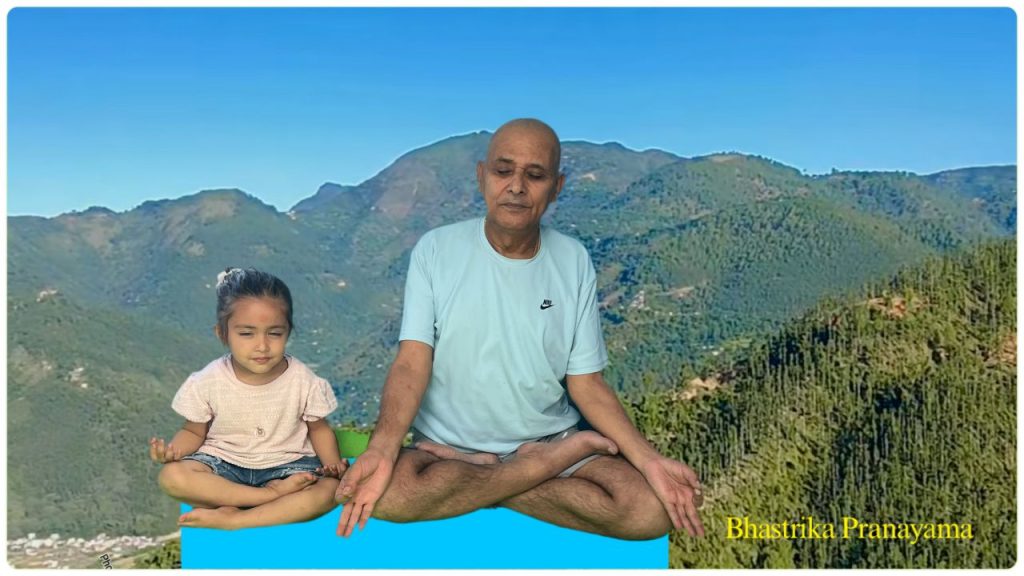
Meaning- Forced breathing like blowing ashes. Sitting in Vajrasana Sukhana or Padmasana, place the fingers of the hands in Vayu Mudra and take a long breath, inflate the stomach and contract it while exhaling.
Benefits–
Bhastrika pranayama Increases the amount of oxygen in the body, makes the lungs strong and active, It makes the digestive system strong and active. Reduces laziness. When we do any physical exercise, our body demands more oxygen and sends a signal to the heart to pump blood faster. As a result, our heart rate increases.
But when we do Bhastrika Pranayama, do we pump more oxygen without any physical demand? Bhastrika Pranayama is a process in which we inhale and exhale rapidly, which instantly releases energy in the body; hence this pranayama is also known as “Yogic Fire Breath”. So, the next time you feel that your body needs energy, you can do Bhastrika Pranayama.
Precautions for Bhastrika Pranayama
1. People with high blood pressure should not do Bhastrika Pranayama. It can be done if high blood pressure is controlled. It can also be controlled by gradually increasing the practice.
2. People with heart disease, dizziness, brain tumors, cataracts, intestinal or stomach ulcers, or diarrhea should not do this pranayama.
3. In summer, to prevent the body from overheating, Sheetali or Shitkari Pranayama should be done. It is better to do this asana with Bhastrika.
5. Ujjayi Pranayama.
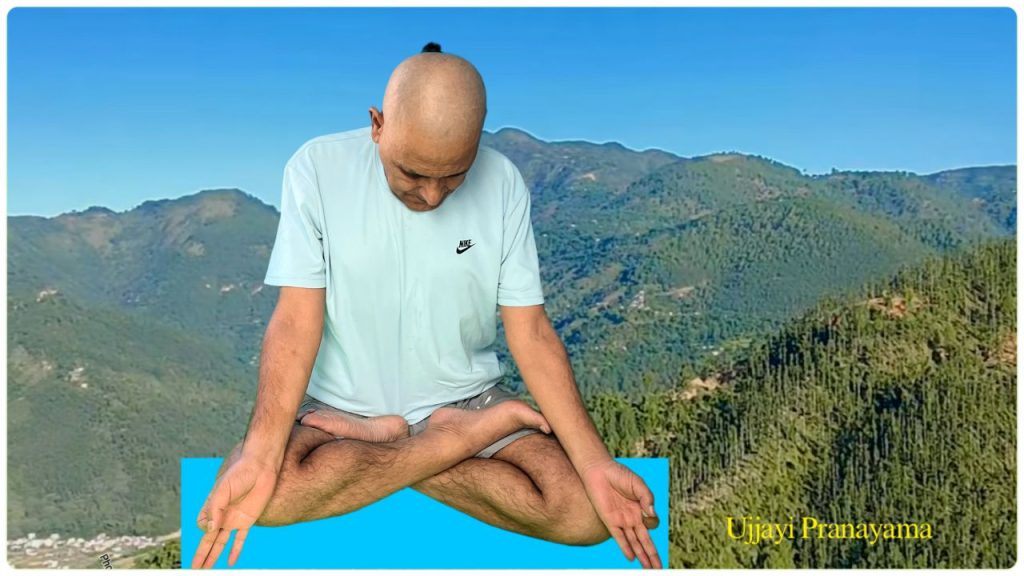
The Sanskrit word Ujjayi means “victorious”. Ji means ‘to win’ and Ud means ‘to bind’. Therefore, Ujjayi Pranayama is a pranayama that gives freedom from bondage.
The method of doing Ujjayi Pranayama. It is to control the breath by making a melodious sound from the throat. Ujjayi is of two types, internal and external. The internal one is done by holding the breath in and the external one is called external Ujjayi.
how we do Ujjayi Pranayama.
1. Sit in any comfortable position. Relax the entire body.
2. Breathe slowly and evenly.
3. After some time, draw the neck towards the chest and focus your attention on the throat.
4. Feel or imagine the breath coming and going from the throat.
5. Take a slow and deep breath, narrow the throat and make a soft sound from the throat while inhaling and exhaling should be long and deep.
6. Breathing through the left, right and both nostrils in the manner described above is a complete cycle of Vastrika Pranayama.
Do this for 10-20 minutes.
If you have difficulty sitting for a long time, you can also do Ujjayi Pranayama lying down or lying down.
Benefits- Thyroid balance, mental concentration, increase in body temperature. Controls phlegm. A melodious voice, makes the sleep system healthy and active.
6. Sheetali Pranayama
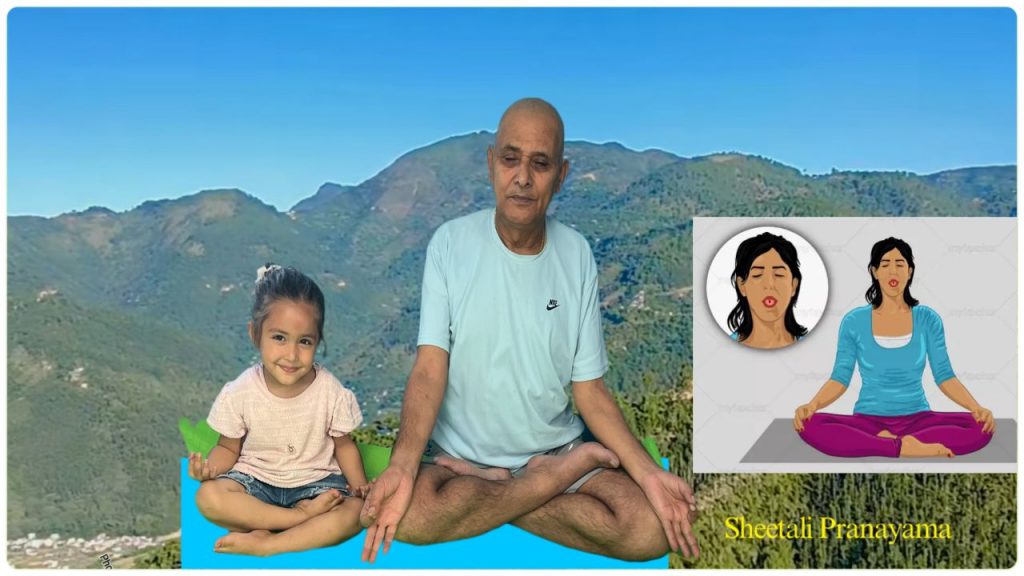
Sheetali Pranayama means “cool”. This is the process of inhaling cool air from the mouth by twisting the tongue. Sitting in Vajrasana Sukhasana or Padmasana with the body relaxed
Benefits- This pranayama is practiced to bring coolness and reduce blood pressure if the body gets hot. It is done in hot weather or environment but it is forbidden to do it in cold weather.
7. Shitkari ( Cooling ) Pranayama
Sheetali Pranayama means “cool and calm”. This is also similar to Sheetali Pranayama. Sitting in Vajrasana Padmasana or Sukhasana and inhaling air through the teeth, holding it for a moment and then exhaling it.
Faigas – This pranayama is practiced to control anger, to make the body and mind calm and cool, to improve oral health.
8. Chandra Bhedi Pranayama.
Chandra Bhedi Pranayama is the process of inhaling through the left nostril and holding it for a moment before exhaling through the right nostril. Practice Chandra Bhedi Pranayama in this correct way – Sit in Sukhasana or Padmasana posture and slowly close your eyes. Sit with your spine straight. Close the right nostril with your fingers and inhale through the left. Hold it in as long as possible and slowly exhale through the left nostril.
Benefits of Chandra bhedi pranayama
Chandra Bhedi Pranayama is incredibly beneficial. In particular, it activates the lunar pulse in the human body. It activates the digestive and sleep systems. It controls blood pressure and reduces stress. The benefits of this pranayama are classified into two types: mental and physical.
A. Mental Benefits
It calms and stabilizes the mind.
Reduces stress and anxiety, helps reduce irritability and restlessness.
Helps reduce negative thoughts.
It is very beneficial for people suffering from insomnia.
B. Physical Benefits
It helps control high blood pressure. Cools the body, especially in summer. Improves digestion and provides relief from stomach heat, acidity and gas problems.
Can help maintain blood circulation, which is beneficial for heart problems. It can also provide relief from skin infections and increase skin glow.
Regular exercise can help heal mouth sores.
Who should not do this?
People with asthma, cough and low blood pressure should not do this pranayama.
This practice should not be done even in winter.
9. Surya bhedi pranayama
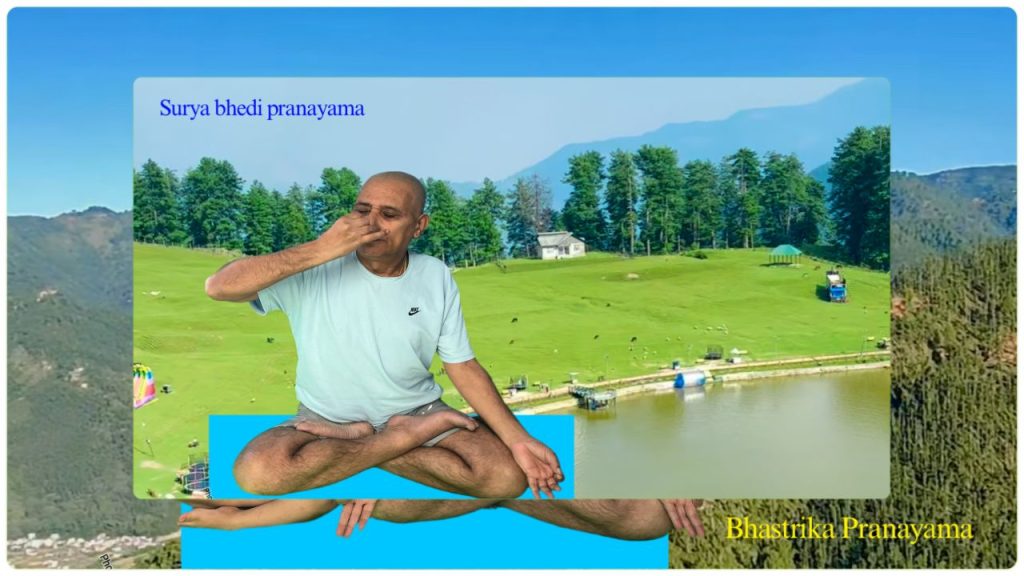
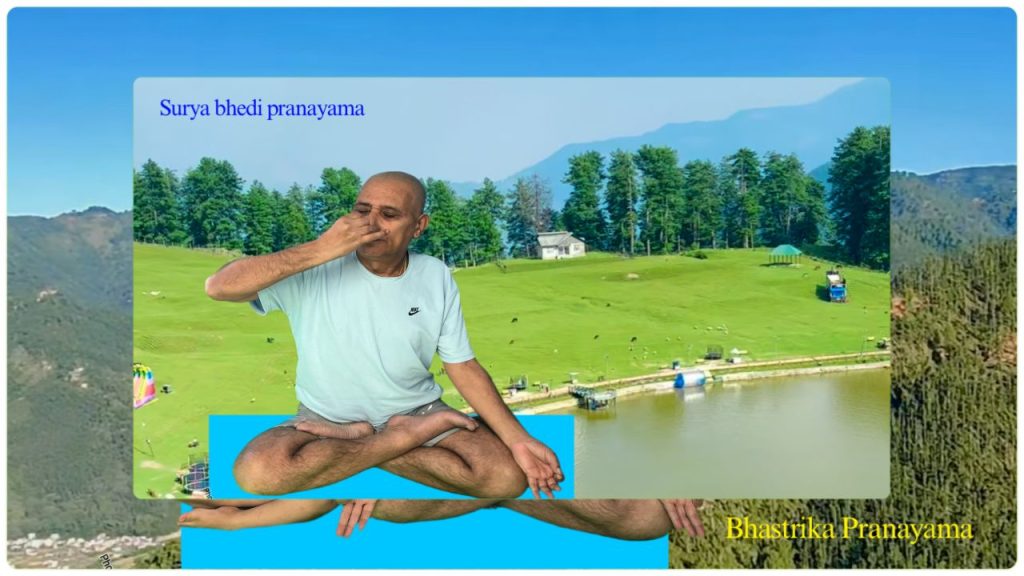
Surya Bhedi Pranayama and Chandra Bhedi Pranayama are similar. It especially activates the Surya Nadi in the human body. It controls heat in the body and activates breathing. How to do Chandra Bhedi: Sit in Sukhasana or Padmasana with your back straight. Close the left nostril with your finger and inhale through the right nostril, hold it as long as possible and slowly release it through the left nostril.
Benefits: points
1. Maintains mental balance. 2. Improves the digestive system. 3. Controls phlegm. 4. Regulates sleep and removes laziness. 5. Eliminates bad breath and also activates eyesight.
10. Om Prnayama .
Om Pranayama is a divine meditation method. This pranayama purifies and activates both the mind and the breath. In ancient times, the sages used to practice this pranayama especially for mental peace and happiness. The sacred sound of Om infuses the entire body with purity and peace. That is why Om Pranayama is called the king of all pranayama. This pranayama is beneficial for everyone in the present era as well. I would like to say that everyone should practice regularly and daily.
Benefits of Om Pranayama.
Om Pranayama is very beneficial. I would like to present its benefits in a few points.
A• Physical Benefits:
~ Makes the lungs clean and strong.
~ Maintains the amount of oxygen in the body.
~ Builds and increases immunity.
~ Keeps the pulse system healthy and controls the heart rate.
~ Relieves anxiety and sleep is also good.
B• Mental Benefits
~ Maintains stability and peace in the mind.
~ Relieves stress,
~ Relieves anxiety and sadness.
~ Increases concentration and memory.
~ Reduces inhibitions and restlessness.
C • Spiritual Benefits
~ Maintains a good relationship between mind and soul.
~ Brings ease to the meditation process.
~ Develops self-knowledge and positive thinking.
D • Other Benefits-
~ Purifies the pulses in our body.
~ Increases physical and mental energy and vitality.
~ Helps to flush out toxins from our body.
Conclusion of pranayama
Prana means life force, breath, and ayam means control. Pranayama is a special yogic practice that balances the energy of the body and mind through the control of breathing. Pranayama is one of the eight limbs of yoga, which is mentioned in the Yoga Sutras of sage Patanjali. Pranayama is believed to have originated in the Vedic period.
It is also mentioned in the Yajurveda, Rigveda, Upanishads, and Bhagavad Gita.
In particular, in the second chapter, 49-53 of the Yoga Sutras of Patanjali, pranayama can be found explained as a way to achieve mental purity through careful control of breathing.In ancient times, sages developed pranayama sadhana for the purification of the body and mind and self-knowledge. In the current noisy and stressful era, its importance has increased even more.
The importance of Pranayama is described in great depth in Yoga Shastra that it maintains balance between body, mind and soul. It provides mental concentration necessary for meditation and samadhi. It reduces mental impurities like stress, anger, greed. It is an essential practice for physical health, mental stability, and spiritual advancement. Special steps in Pranayama practice
Sit in Sukhasana, Padmasana or Siddhasana in a quiet environment. Keep the spine straight so that the breath flows easily. One should be aware of the breath. Taking a breath is called Puraka, stopping it is called Kumbhak, and throwing it away is called Rechaka. This process should be done skillfully. I have mentioned 10 myths about the different types of Pranayama. I do Pranayama and Yoga by rules and regularly. I would like to appeal to everyone to make life meaningful by practicing Pranayama regularly and properly.
Next Post: Yoga & Meditation