
योगः कर्मसु कौशलम्: Yoga is to perform all actions with concentration and skill.
Table of Contents
Ashtanga Yoga Rules and Practices
Yoga was received as a blessing from the Supreme God Shiva for mankind with the creation of the world. After that, the great sage Patanjali meditated on Shiva and penance and recorded yoga for practice, and made a collection of rules. In this way, it is believed that Shiva originated yoga, and the rules were managed by the great sage Patanjali. This systematic yoga book has been popular from the past to the present era.
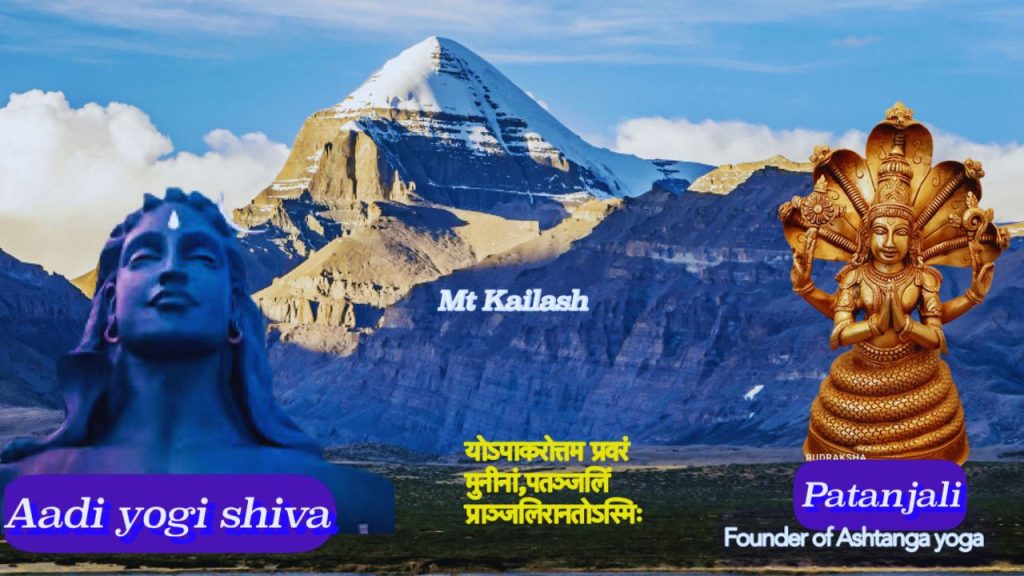
Ashtanga Vinyasa yoga, a specific style of yoga based on the eight limbs, emphasizes a dynamic and flowing practice especially synchronized with the breath and body. It involves a set sequence of postures, known as the Primary Series, Intermediate Series, and Advanced Series. Each series begins with Surya Namaskara (Sun Salutations), followed by standing poses, seated poses, backbends, and finishing poses
Ashtanga Yoga-Patanjali Yoga Philosophy
The first official text written about Ashtanga Yoga is the Yoga Sutras of Patanjali. There is a scientific explanation that this state can be achieved by going through the eight different stages of Ashtanga Yoga . As follows- 1.(अहिंसा) Non-violence 2. (सत्य) Truth.Speak and act truthfully.3. अस्त्येय None steals 4. (ब्रह्मचर्य)Brahmacharya. control of all senses and utilization of sexual energy. 5.(अपरिग्रह)Non-attachment. Don’t collect more things than necessary.
Yama: The first stage of Astana yoga
The first step of Ashtanga Yoga is Yama. Yama means the first rule of Ashtanga Yoga is Yama. Yama means self-control or restraint. Its purpose is to awaken oneself in moral strength. Morality is the first foundation of a successful life. That is why Patanjali put it at the beginning. The path of yoga begins with the practice of morality.
Scientists have also proven that a moral person has fewer mental problems. The basis of the law of success is also morality. Yama in Ashtanga Yoga is the first of the eight limbs of yoga. It refers to the following five ethical rules: ahimsa, satya, asteya, celibacy, and aparigraha. These rules govern personal and social conduct, preparing the mind and body for yoga.
1.अहिंसा Nonviolence
There are three types of violence: Physical, hurting others with the physical body. Such as cutting, beating. Verbal hurting others by speaking. Such as cursing, scolding, speaking harsh words, speaking hurtful words, etc. Mental thinking: Thinking ill of someone or wishing harm to others, imagining harm to others, etc. To live in harmony and charity, always free from these three types of violence, is non-violence.
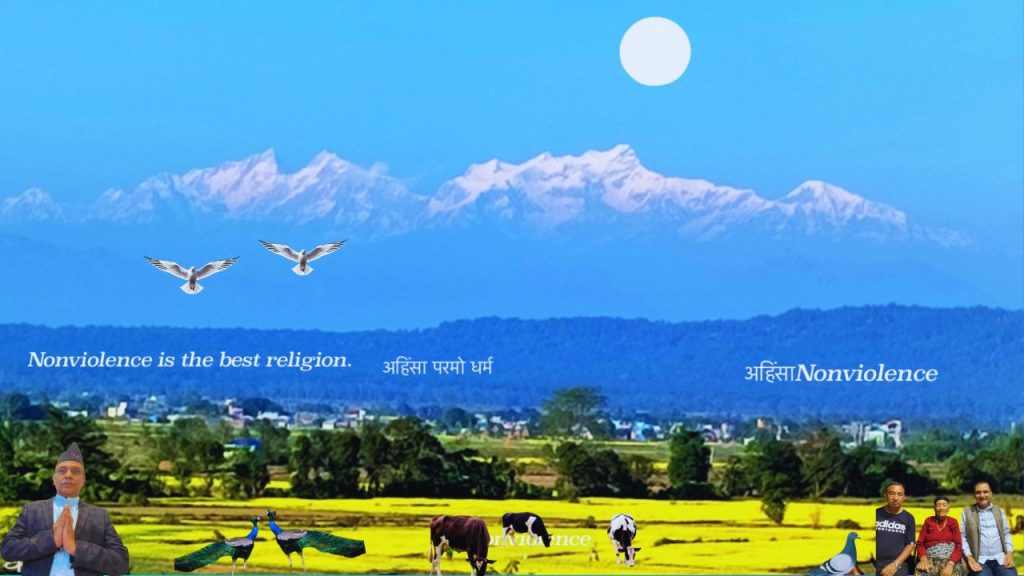
Non-violence is not done in all three types. This is also the main teaching of Buddha. One should not do anything with the intention of hurting others. If one has been hurt unintentionally, one should apologize. If it is difficult to go and apologize directly, one should apologize in one’s heart. Nowadays, we can see an increase in violent activities. Let us be aware and not get involved in it, and follow the path of non-violence. Only then will our lives be happy and meaningful.
Now, a new business campaign has started in developed countries, including America and Europe. That is also a practical application of non-violence. Win-win Theory. Working for the benefit of both parties. Success gurus have also taken this principle as a very important step to success. The principle that if you do good to others, you automatically do good to yourself has been flourishing in Western business. Success achieved by causing suffering to others is fleeting, even in this world.
Europeans are now understanding what was developed thousands of years ago in eastern countries like Nepal and India.In the rural areas of Nepal, there are still non-violent people who do not want to hurt others, but rather want to help and make them happy. There is no theft, cheating, deceit, or selfishness in the villages. The people always live in peace and happiness.
2.सत्य Truth
Our life runs only on truth, not on falsehood. If we abandon the path of truth and follow falsehood in speech and action, we will have to face difficulties in life, and life itself may be like death. The Earth is fixed by truth, and the sun is warm because of truth. The air moves by truth because everything is based on truth. This is the law of nature. Therefore, let us always speak the truth and act and behave truthfully; this is the key to our peaceful and happy life

The most common definitions of truth connect with the fact. In other words, establishing truth relies on facts as they stand, and a belief or proposition is defined as true if that belief or proposition corresponds to facts in the real world. Truth is classified as follows: 1. Historical truth, 2. Narrative truth 3. Historical truth 4. Judicial truth 5. Poetic truth 5.Manufactured truth 6 Existential truth, etc.
3.अस्तेयः Not to steal
अस्तेयः Asteya means not to steal! Stealing from others is a big crime. Due to theft, major unrest has occurred in families, communities, countries, and the world. Therefore, it is worth following the very important rule written by the great sage Patanjali in the Ashtanga Yoga Sutra. Let us live by earning our income and never even think of stealing.
4. (ब्रह्मचर्य)Brahmacharya. restrain
(ब्रह्मचर्य)Brahmacharya means control of all sense organs and utilization of sexual energy. Self-control and restraint are important spiritual elements in human life that lead humans to the path of peace and happiness. Without self-control, sometimes activities can be harmful, and life can be trapped in sorrow and pain. Therefore, one should be self-controlled in speech and behavior. Patanjali has presented this sutra of wisdom for humans in the ashtanga yoga formula.
5.(अपरिग्रह)Aparigraha Non-attachment.
अपरिग्रह Aparigraha means Don’t collect more things than necessary. Accumulating more material or wealth than necessary does not bring happiness and peace to a person. Therefore, it is a good habit to fulfill only the needs and enjoy them. Unnecessary material and wealth can sometimes cause suffering. It is with this far-sighted thinking that Patanjali may have written it. Therefore, let us follow all the rules of Ashtanga Yoga and live a happy and peaceful life.
Brief about Ashtanga Yoga
The Ashtanga Yoga Sutras, created by the Supreme God Shiva, the creator of the universe, and written down by the great sage Patanjali, are very important for human life. The Ashtanga Yoga Sutras not only teach a person’s physical and mental behavior, but also the socio-political sphere. Now I have briefly explained the first of the 8 sutras of Ashtanga Yoga, “Yama”, about moral restraint and social conduct. I will write about the rest in future articles.
Next post: Spirituality and Benefits of Yoga