
Table of Contents
What is education
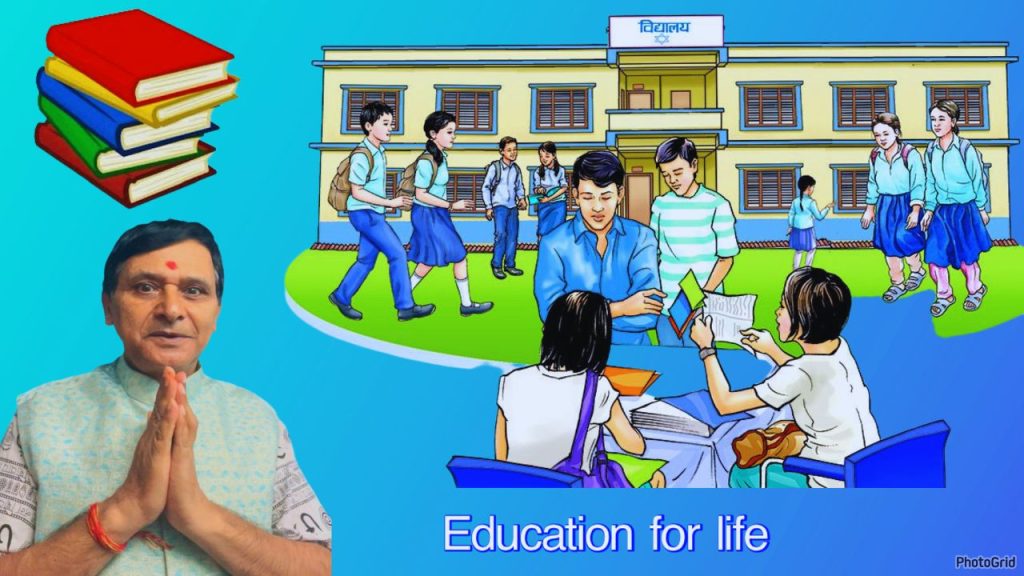
Education is the act of teaching knowledge to others or receiving knowledge from others. Education is said to be the knowledge obtained from educational institutions. Looking at real-life examples, primary schools to high schools, or colleges are institutions focused on education. People are taught important information and skills necessary for life in these places. Medical colleges and law schools provide more specialized types of education.
Education is the art of teaching how to live a good life. Proper education of children is considered important in every country. We have been calling education the things that are taught in school, such as culture, discipline, information, learning about school subjects such as science, teaching, brainwashing, training, reproductive health, civilization, history, geography, counseling, and farming systems.
The European school system includes two years of early education (nursery cycle), five years of primary education, and seven years of secondary education. The education system in Switzerland and some other countries in Europe is said to be highly valued in the world. The curriculum of these countries is said to be the best in the world.
Compulsory education in Switzerland lasts from 9 to 11 years. Most children must start primary school at the age of six. Primary education lasts for eight years. However, only six of them are compulsory. Compulsory secondary education lasts for 3 years. The American education system includes 12 years of primary and secondary education, before students can proceed to post-secondary education. The school calendar in the United States begins in August or September and continues until May or June. Most students start school in the fall.
Many families around the world aspire to and strive for an American education for their children because American schools are known for providing high-quality education through a balanced curriculum of effort and testing. But underdeveloped countries are running on average. The education system in Africa is divided into three levels: general education and training, further education and training, and higher education and training.
Critical Theory of Education
Educational theory does not seem to be applied equally around the world
Critical theory of education is a philosophical, political, and pedagogical response to real-world situations that attempts to change the purpose, scope, and delivery of education in order to achieve cultural and social transformation through the progressive development of the individual.
Was it justified? Was it just? Was there equality? Brazilian educator Paulo Freire envisioned a world where all students developed their critical consciousness. Now you ask yourself why we can’t do the same. Paulo Freire was a champion of what is today considered an important educationalist, creating the belief that education should challenge students to examine power structures and patterns of inequality within the status quo.
Time changes and education

As time changes, various life-useful education that can easily meet the needs has started to be taught, such as banking education and transformative education. Banking education develops such a tendency in students and participants that they cannot rise above the status quo by keeping the knowledge received from teachers and elders as a hindrance. Therefore, education turns into exploitation.
Not providing an environment for the development of creativity within students and participants, and creating a situation where they are always absorbed in old thinking, is the exploitation of intellectual fertility. This does not allow students to be exploratory and creative and does not allow them to develop critical consciousness.
The educational system should be interdependent rather than dependent on the teacher alone. There should be a change in the thinking that the student or participant is a zero and empty vessel and the teacher is the whole. An interactive and interdependent educational system is called a ‘problem-centered education system’ or ‘transformative education system
An environment for the development of inherent capabilities is provided in the transformative educational process. In this way, knowledge and information are not only transferred, but they are also analyzed according to the situation, and the student understands the essence instead of memorizing it and uses the essence thus obtained on the path of transforming his life.
For example, getting a message from a colleague or teacher that exploitation should not be done cannot be the main thing; what is exploitation? How and in which areas does exploitation occur? Why does exploitation occur? It is important to analyze and gain awareness of what to do to avoid exploitation and what your role will be for others. In the traditional banking educational process,
The teacher/lecturer tries to transfer the burden of knowledge of his Mathingal onto the student participants, but in the transformative educational system, the students/participants are active with the teacher as critics and co-investigators and remain active in acquiring new awareness and knowledge. They are ready to put the essence of the learning they have extracted into practice and increase it quantitatively and qualitatively.
Egalitarian education. We should pay attention to what kind of educational system we should adopt for an advanced and egalitarian society. From individual transformation to overall social transformation and the restructuring and transformation of the state, the educational system plays a major role in its stability and institutional development.
The educational system is not limited to the act of writing and reading. It is related to observing, listening, understanding, and interacting. In other words, the educational process transfers and builds knowledge, skills, concepts, culture, and attitudes. A teacher helping a student learn within a certain subject and a mother helping her child to develop customs, values , and attitudes are both part of the educational process.
Creative education.
To make our education creative and creative, we should adopt a transformative educational process. Banking educational methods develop the status quo and hegemonic thinking in people. The education and attitudes that are passed down from our family, society, organizations, classmates, teachers, etc., are more banking than transformative and do not provide an opportunity for the development of analytical tendencies in people.
Education should not instill unhealthy tendencies in the student or recipient. Rather, the educational process should create a churning within the individual, which can eliminate unhealthy thoughts and develop a positive and scientific consciousness.
Therefore, since every individual participates in the educational process in some way or another, it seems inevitable to adopt a transformative educational system for a progressive and egalitarian society. A transformative educational system enables individuals to become more practical and creative.
Education for a Peaceful Life
Education is the foundation of a happy, peaceful, and ideal life. Education is not just about reading books; it is the process of learning the art of living. It gives people the ability to distinguish right from wrong, morality, discipline, and a sense of responsibility.
Education and Happiness
Education makes people self-reliant. After acquiring knowledge and skills, life can be made easier through employment, business, or other work. A self-reliant person is financially secure, which brings happiness in life.
Education and Peace
An educated person is tolerant, prudent, and understanding. He learns to solve problems through dialogue and understanding, not violence. Therefore, education plays a crucial role in establishing peace within the family, society, and nation.
Education and Ideal Life
Education teaches moral values - truth, honesty, hard work, discipline, and respect.t Such qualities make a person an ideal citizen. An educated person is responsible for society and makes a positive contribution. Practical Education
Conclusion
Not only theoretical knowledge, but also practical education is necessary. Skills such as good use of time, taking care of health, protecting the environment, and cooperation make life better.
Education is the light of life. It dispels the darkness of ignorance and spreads the light of knowledge. Only if we receive the right education can we live a happy, pop peaceful, and ideal life.
Next Post: Behavioral education