
What is education? The real meaning of education is to develop all aspects of a person, including intellectual, physical, social, economic, material, moral, etc. Education is the process of learning and teaching knowledge and skills. Education takes people from darkness to light. Education is a continuous process.
Table of Contents
Informal education is the mother of formal education. The state must manage and operate both equally. The two wheels of the chariot of education are formal and informal. If equal importance is not given to both, the country’s educational journey cannot progress.

Meaning and importance of informal education
Informal education is the mother of formal education. Informal education has been developing, preserving, and promoting tradition, culture, customs, behavior, and human civilization since ancient times. The learned sages( ऋषि हरु) and wish mem/women of ancient times were not the products of any school, but rather the product of education given by religious organizations of an informal nature.
Classification of education
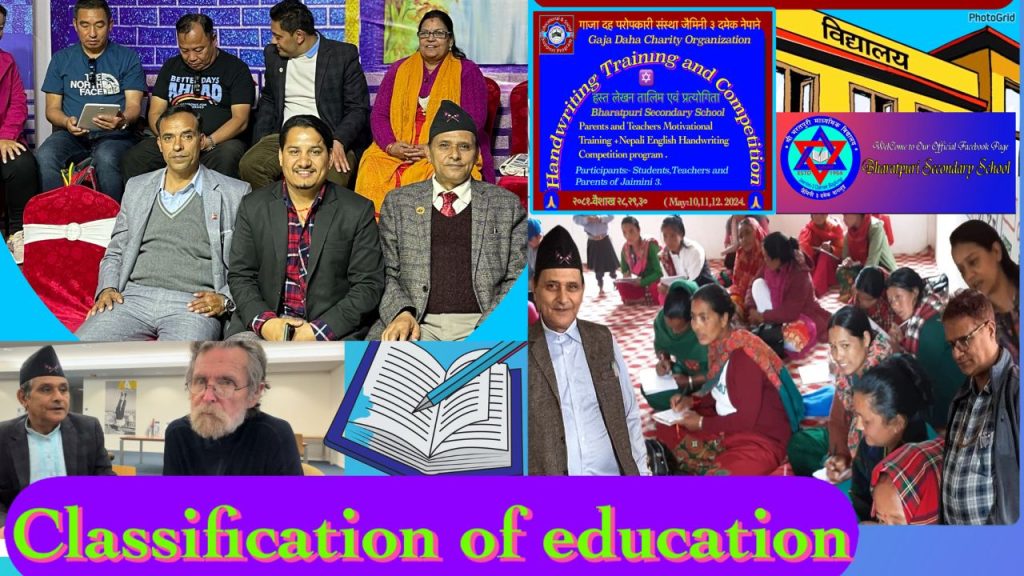
Education can be classified in many ways. Based on the subject, such as English, Nepali, Mathematics, Science, etc. Based on the medium of learning, such as listening, seeing, reading, writing, doing, etc. Based on the management, formal and informal. Here, I would like to clarify specifically about informal education.
History of informal education
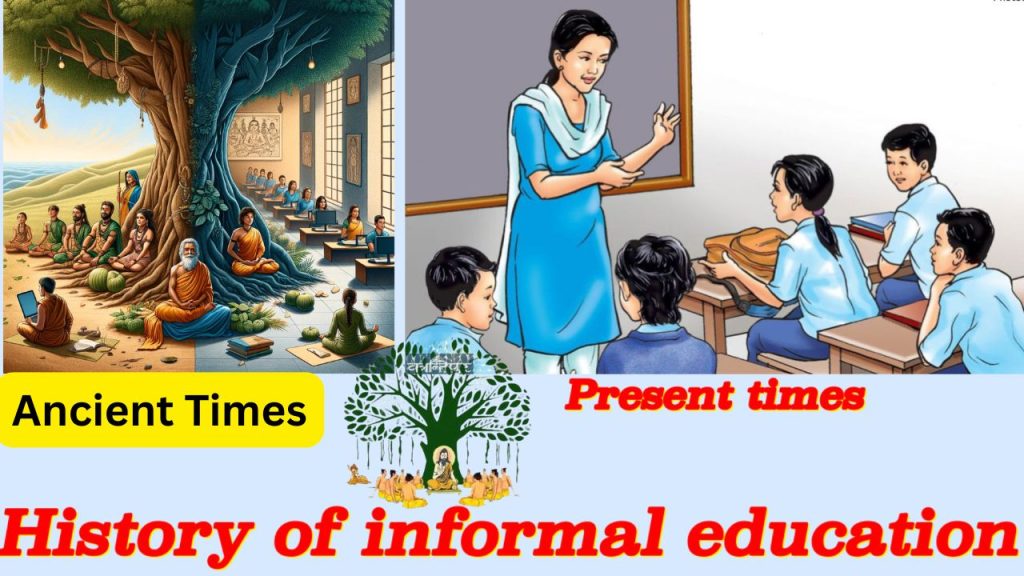
The history of formal education is not as long as informal education. The product of skilled scholars produced by informal education since ancient times is formal education. The glory of informal education is unique in making human life strong, wise, and successful. The curriculum of formal education, the structure of educational institutions, class hours, and the age of study, etc., have narrowed the scope of acquiring knowledge and skills. Informal education has the characteristic of being able to be acquired at any time and place according to the needs, desires, and demands of the time.
All-encompassing and continuous process
Education is a continuous process throughout life. Miraculous discoveries are being made in science and technology moment by moment. In order to assimilate the new knowledge and skills invented at a rapid pace, one must constantly update oneself through information and new technology.
Formal education taken at a specific time is not enough. For this, community learning centers under informal education, which are well-equipped with resources and easily accessible to all, can be a powerful medium to keep them informed about the latest innovations in knowledge, science, and technology.
Learning from birth to the end of life
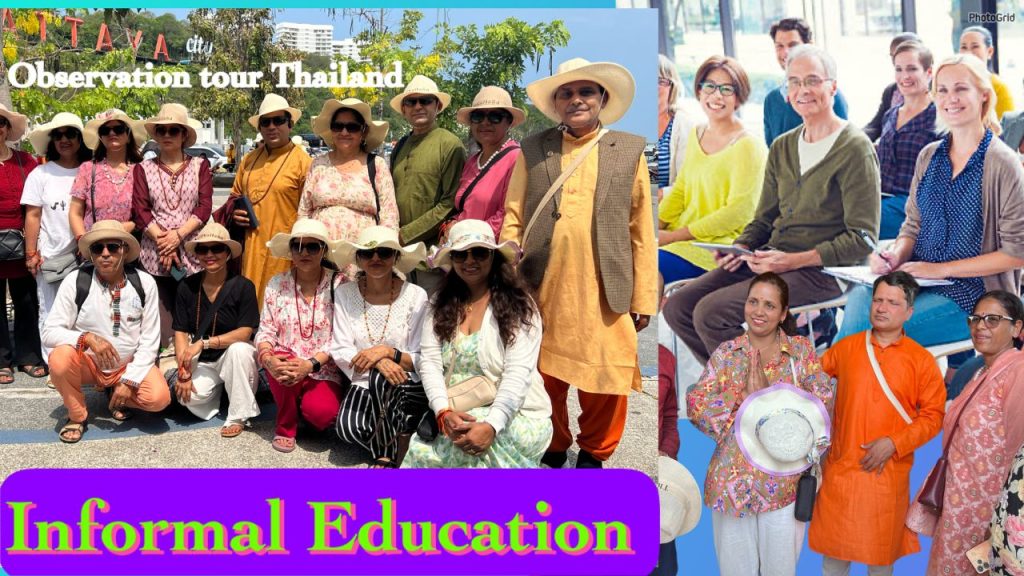
Learning is a process that continues from infancy to old age, and even from conception to death. In order to strengthen one’s presence in society by acquiring life-saving knowledge and skills through various means and methods, the necessary knowledge and skills must be acquired through both informal and formal means. In today’s 21st century, science and technology are developing and expanding rapidly. In order to bring prosperity by making maximum use of modern technology, the contents of formal education become stale in some respects. There is no alternative to developing and expanding systematic and accessible informal education to continuously update the existing knowledge and skills in oneself and live a successful life.
Comparison of formal and informal education
Formal and informal are the two wheels of the chariot of education, complementing each other. Informal education undoubtedly contributes to discouraging and minimizing some of the distortions, inconsistencies, and losses seen in formal education. Because the starting point of informal education is literacy, through which a person gains competence by modifying, refining and empowering his/her abilities.
As his/her income naturally increases, children get the opportunity to pursue education in a comfortable family environment. Their school attendance and achievement level are undoubtedly high. Therefore, ignoring informal education in any sense means pushing back the pace of development. At least a permanent educational structure is needed to systematically reach such important informal education programs to the community.
Keeping this reality in mind, the Government of Nepal has also adopted a policy of establishing community learning centers through informal education centers. Therefore, community learning centers are no different from informal schools. The reality is that the state’s investment and attention to enhance its dignity based on the scope and inevitability of informal education is not enough. There is no alternative to informal education to live a quality and competitive life.
It is the responsibility of the state to ensure easy access to continuous knowledge acquisition for those who have not attended school or college, are illiterate, or have already received formal education. Keeping this reality in mind, in Nepal, like in other countries, the Informal Education Center has been operating various programs to provide timely knowledge and skills to the masses who have been alienated from formal education.
Among the programs run by the Informal Education Center, open and alternative schools have been arranged for children who have dropped out of school, including informal adult schools for those above 15 years of age and community learning centers to teach income-generating skills to women. Among these, the policy of establishing community learning centers through the Informal Education Center has been adopted with the broad objective of operating various informal programs that will help in immediate income generation.
In order to overcome social distortions, anomalies, and superstitions, it is necessary to have access to continuous education to evaluate and assimilate the real competition and rapid changes taking place in the global labor market of the 21st century. Age and time do not prevent learning. A child’s first teacher is the mother, and the first school is the family. The family environment has a far-reaching impact on the study and life of the child. It is said that if the mother is educated, the entire family is educated, but if the father is educated, it cannot be said that he alone will not be educated.
Some challenges in education
The main challenge of formal education is to motivate children who have already entered school to continue their education. Community learning centers can be considered as a powerful alternative to address the negative trends of formal education, such as dropout, absenteeism, and low passing percentage achievement levels. Because classes can be conducted by arranging a library in the community learning center.
On the one hand, it seems that 66 percent of the students enrolled in primary schools are currently at the lower secondary level, and only 21 percent of students have passed the secondary level SLC examination. On the other hand, the number of those who fail by scoring 32 percent and failing is also significant. The achievement level of students has not reached the 50 percent achievement level. Achieving 100 percent marks is like shooting a star from the sky.
Similarly, the achievement test report conducted by the Department of Education has shown that the average achievement of primary-level students is only 45 percent. Only 21 percent of the students enrolled in grade 1 manage to appear for the secondary education passing examination. Thus, we are faced with the harsh reality that millions of children have dropped out of school without even passing the secondary education examination.
Thus, various programs under informal education can be a strong alternative to provide continuous education and training to human resources who have been turned away from formal education for various reasons, and turn them into skilled human resources.
Conclusion on informal education
This article specifically describes how informal education, which has been practiced since ancient times, is very practical, informative, and simple. Similarly, informal education is the mother of formal education. Special arrangements should be made for people who do not have access to formal education. Formal and informal are two wheels of the same chariot.
If the government cannot operate both types of education systems equally, the country’s education cannot progress. Therefore, suggestions have been made to the government officials.
next post: Formal education and English in Nepal