
Lifelong learning means the acquisition of knowledge and skills throughout life, both formally and informally, to enhance personal and professional development. It refers to self-motivated exploration. It is a voluntary and continuous process that extends beyond traditional schooling, encompasses learning activities in different life contexts, and aims to meet diverse learning needs and demands as follows
Table of Contents
Key aspects of lifelong learning:
Continuity in learning: It is not a one-time event but a continuous journey of learning and development. Life is ever-changing. The tools that meet today’s needs may not meet tomorrow’s, so learning new technologies is essential.
Being self-motivated
Individuals actively choose to learn and pursue knowledge and skills based on their interests and needs. Diverse needs arise throughout life and need to be met. This is learning. And it needs to be challenged according to the time and situation.
Formal and informal learning
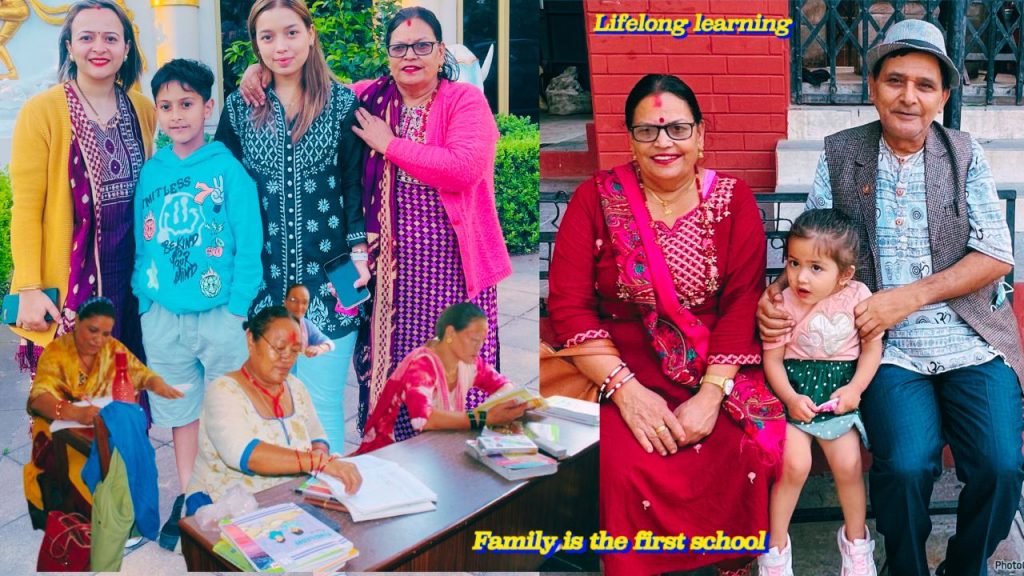
Learning can occur through structured educational programs (formal) or through everyday experiences, hobbies, and self-directed learning (informal). These may change over time and in different situations. As times change, studying and learning skills that are appropriate to the environment and circumstances become essential for life.
Learning for personal and professional development
Lifelong learning can contribute to both personal fulfillment and career advancement. It is a lifelong process. This may vary depending on the place of residence, social environment, and changes over time.
Creating and developing adaptive skills
In a rapidly changing world, lifelong learning is essential for the workforce to remain relevant and competitive and to adapt to new challenges and opportunities. We are learning and experiencing that as the means and methods of meeting needs change, the skills used also need to change according to time and conditions.
Holistic learning
It includes learning activities across all age groups and in different life contexts, including the family, community, and workplace. It is mandatory for everyone in the community
Increasing responsibility
Lifelong learning should meet the diverse learning needs and demands of individuals at different stages of life. It is mandatory for people of all ages and classes.
Examples of lifelong learning:
Taking an online course to learn new software.
Participating in workshops to develop specific skills.
Reading books or articles to expand knowledge in a specific field.
Learning a new language for personal enrichment or professional opportunities.
Engaging in volunteer work to gain new experiences and perspectives.
Mentoring others to share knowledge and skills.
Why is lifelong learning important?
For personal growth
It promotes self-discovery, broadens horizons, and enhances overall well-being. Overall well-being is an element of a happy and peaceful life.
Career advancement:
It helps individuals stay relevant, adapt to changing job markets, and pursue new career paths.
Social benefits:
It contributes to building a more informed, engaged, and adaptable society.
Facing the challenges of a changing world:
It equips individuals with the skills and knowledge to navigate complex issues such as technological advancement, globalization, and climate change.
In short, lifelong learning is a mindset and a commitment to continuous growth and development throughout life. It is essential to change with the times.
The need for lifelong learning
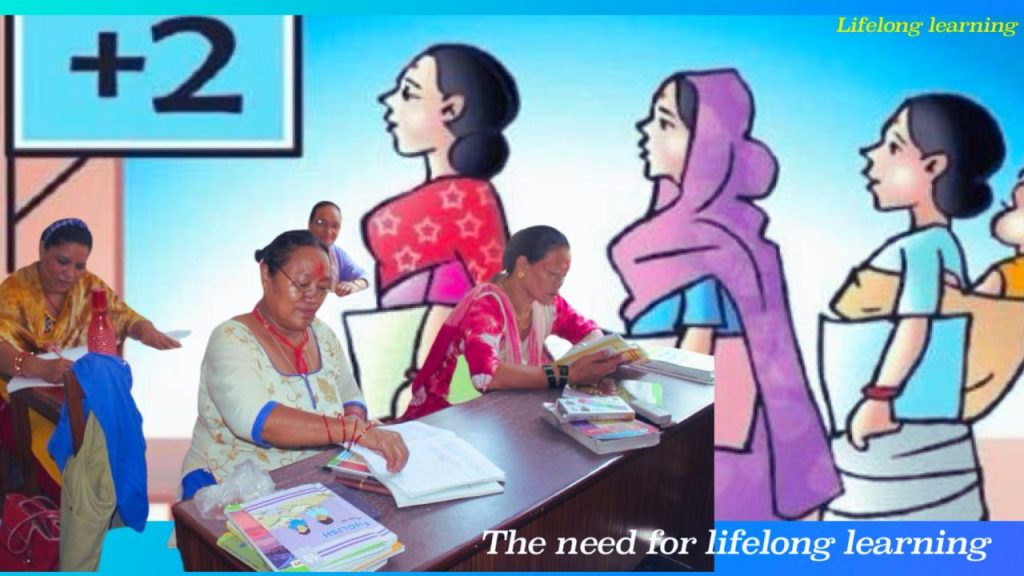
Education is very important in a person’s life. Education is a means of learning new things and developing the art of living. Education teaches us how to make a place for ourselves in this difficult world. It teaches us how to make life easier. Education is not just about going to school. It is also about learning how to cook at home, wash clothes, and do your own work. Nowadays, many things are improving in the educational world. Modern science has given new technologies to human life, and new learning is essential to use them.
Learning in the past and now
There were not many schools. Even in the schools that existed, only boys could study. Discrimination was rooted. The belief that girls should not study was promoted. Now, times are changing. Both children and adults can go to school. Due to education, there has been some change in the hateful and bad thinking of people in society. With the change of time, the way of life also changes, so it is essential for educated and expert people to learn new ways.
The need for practical education
It is not enough to just get an education, for that, good culture is needed, and not just culture, practical knowledge is also needed to advance culture. How we raise our children depends on our culture. We need to teach our children to develop physical fitness, healthy habits, creativity, respect, and harmony towards caste, religion, language, culture, and region, as well as to identify practical problems that arise in daily life and find solutions.
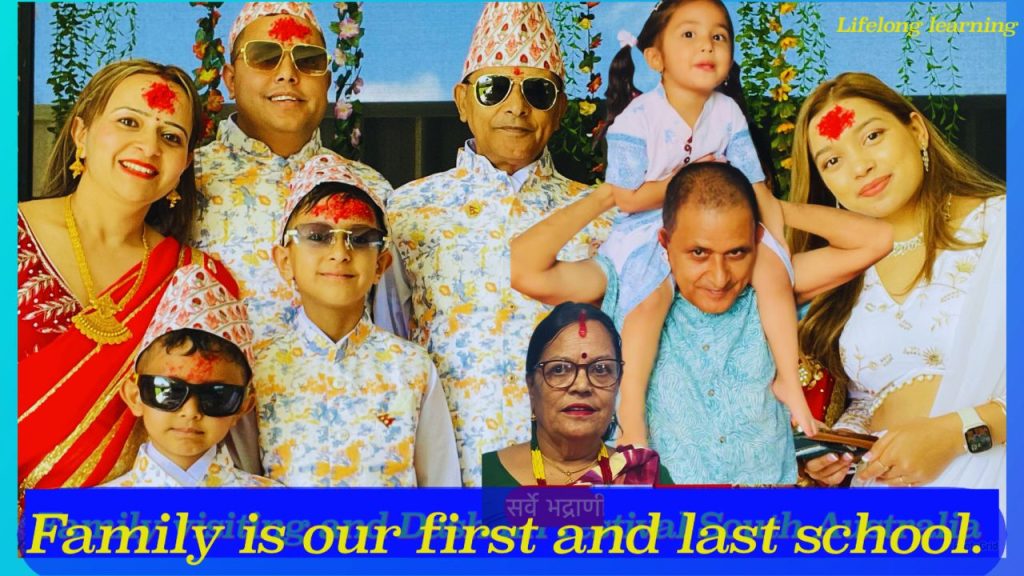
Family is our first and last school.
Family is our first school. A person is not born knowing everything. Initially, he learns something from the family. Family members receive education from all the grandparents, father, mother, uncle, aunt, brothers, and sisters. Therefore, the family environment plays an important role in what a child learns. The child imitates what the family members do and learns the same. Therefore, even small children become well-behaved through the good behavior of family members.
Prominent people of the country
Some examples of our country’s jewels can be taken. Senior litterateur Parijat wrote a book called Shirishko Phool even when she was sick and could not get up. Now that book is kept in a school in America. She has made her and her country’s image very high by writing this book. This contribution she has made is due to education. Similarly, there are many jewels, including Adikavi Bhanubhakta, Mahakavi Laxmi Prasad Devkota, and singer Narayan Gopal, whose stories we continuously gain knowledge from by reading.
Conclusion
Lifelong learning is a very important and essential thing for a person. Home and family are our first and last school. Family and social rules, culture, discipline, and conduct are the elements of knowledge that are learned in the family. In the family, we learn and teach many important things from birth to the end of life. Therefore, it is imperative that we continue to learn and teach in a calm, patient, and self-disciplined manner.
Next post:Quality Education