
Table of Contents
How was the journey?
BS 2053 Asoj 11 (September 27, 1996)
My Muktinath trip with my mother started BS 2053 Asoj 11, Friday. At 05:30 in the morning, the light was just beginning to spread. The hills and green fields of the village were sparkling with dewdrops. That day, I set out from home to fulfill a sacred resolution in life—to take my mother on a pilgrimage. Since childhood, my mother used to tell me,
Because of ill health, my mother had to postpone her travel plans many times in the past. Only my father used to go. My mother was still thinking about going to Muktinnath and other pilgrimages. This time, I made a plan with the determination to complete my mother’s deception
“One day, we will visit Muktinath.” Therefore, that day was not just a trip for me, but a confluence of devotion, duty, and love.
After receiving my father’s blessings from home, we set off on our journey. We walked for 5 hours continuously on foot through Deurali Sigana Kathokhola, facing dusty and sometimes even thorny paths, and listening to the enchanting songs of birds on the other side. We reached Baglung Bazaar. The energy and excitement were intense.
Galeshwor Dham
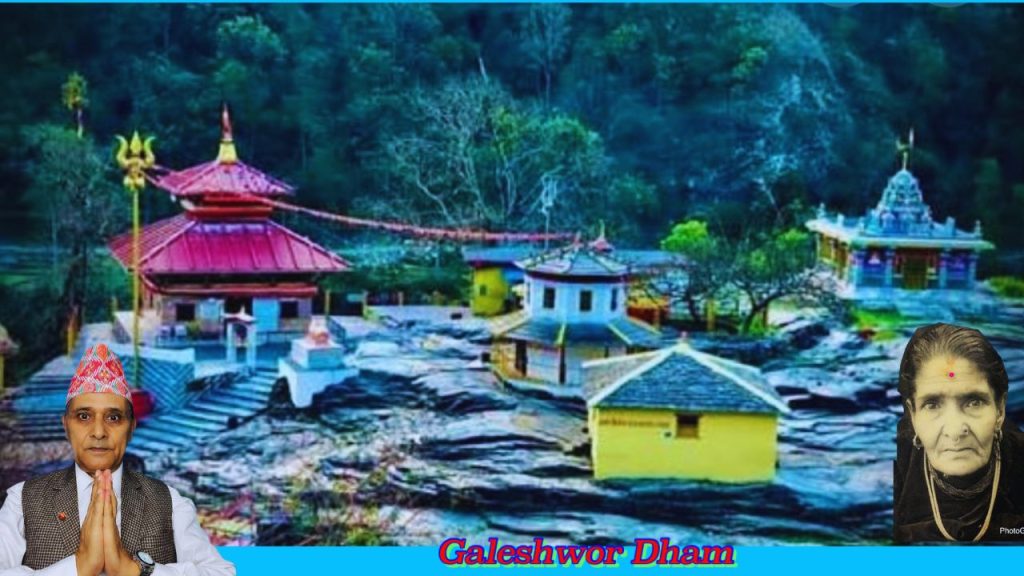
The first big stop was Baglung Bazaar. The banks of the Kaligandaki, the hustle and bustle of the market, and the crowd of travelers seemed to be filled with religious feelings. From there, we reached Galeshwor Dham. The temple of Galeshwor Mahadev, located in the middle of the Kaligandaki River,r is a very beautiful and sacred place.
Mother offered water to the Shivalinga with reverence. I also folded my hands, wishing for the happiness and peace of the family. The peaceful atmosphere there, the melodious flow of the river and the melody of the bells made me feel peaceful from the heart. The fatigue of the journey eased a little, and confidence increased—we are in the right direction
Ancestor Shraddha at Kagbeni Tirtha
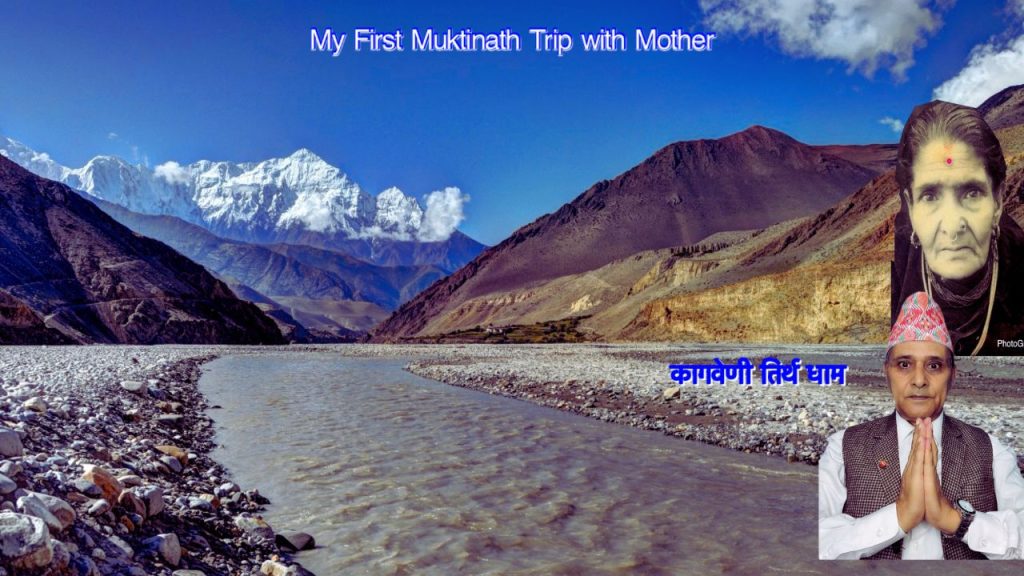
Another important destination was Kagbeni. The holy confluence of the Kaligandaki and Jomsom rivers. When we reached there, it seemed as if the air was filled with a spiritual fragrance. We performed Shraddha rituals remembering our ancestors. I also experienced the fulfillment of my mother’s dream of going to Kagbeni Tirtha with Baba.
The priest’s chanting of mantras, the flow of the Kaligandaki, and my mother’s wet eyes all these scenes made my heart emotional. It was a great privilege for me to be able to repay my ancestral debt as a child raised by my parents with great difficulty. My mother said, “Today my heart is lighter.” That sentence made me feel that my journey was worthwhile..
Kagbeni to Muktinath
The uphill journey from Kagbeni to Muktinath via Ranipauwa was difficult. The air was getting colder. The path was rocky and narrow. Sometimes I had to hold my mother and walk. It was difficult to breathe due to the height. But my mother’s strong will was amazing. “God is calling, I will reach,” she would say.
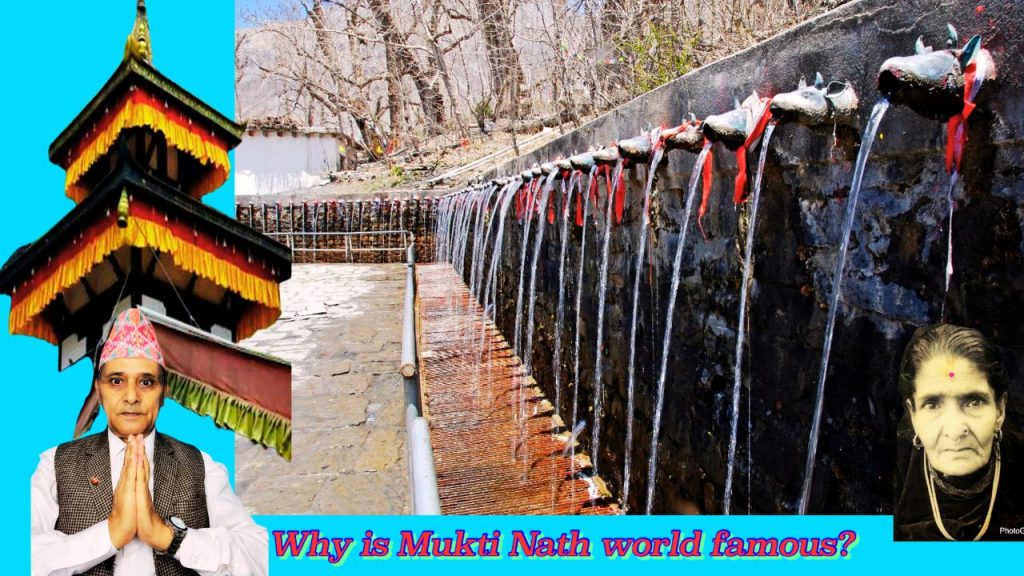
Finally, we reached the Muktinath temple premises. Seeing the crowd of devotees bathing in the cold water flowing from 108 streams filled my heart with excitement. My mother also took a bath in 108 streams, shivering. I stood nearby and supported her. Then we entered the temple and performed ritualistic worship.
Words are insufficient to describe that moment. The peaceful atmosphere of Muktinath, based on religious tolerance between Hindus and Buddhists, located in the lap of a mountain 42 meters above sea level, the melody of the bells, the sound of mantras, and the satisfaction seen on my mother’s face—all these have become priceless memories of my life.
Why is Mukti Nath world-famous?
Muktinath Temple is located at an altitude of about 3,710 meters (12,172 feet) above sea level. It is located in the Mustang district, within the Annapurna Himalayan region.
The main reasons why Muktinath is famous worldwide. In Hinduism, it is considered the holy abode of Lord Vishnu (one of the 108 divine desams).
In Buddhism, it is known as “Chumig Gyatsa” and is considered a very sacred place. Its 108 dhara (water streams) and natural jwala (fire burning from gas) are special attractions. The enchanting view of the Annapurna mountain range attracts tourists and pilgrims. Due to this, Muktinath has become a renowned pilgrimage site worldwide, both from a religious and cultural perspective, as well as a natural one.
Baglung Kalika Temple
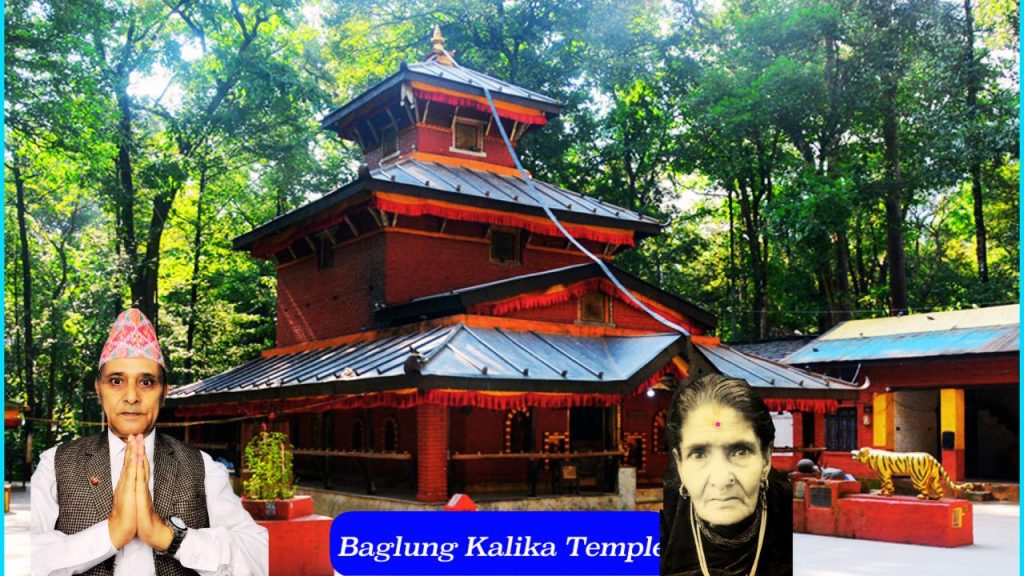
On our way back from Muktinath, we stopped to offer prayers at the Baglung Kalika Temple. Baglung Kalika Temple is one of the famous religious and tourist destinations in Nepal. This temple is located at the confluence of the Kali Gandaki River and the Kathekhola, which makes it even more sacred from a religious point of view. Devotees from Nepal, India, and other countries also visit it.
Religious importance. The place where the Kalika Temple is located is located about 1 km from Baglung Bazaar, the headquarters of Gandaki Province, Baglung District. An idol of Bhagwati Kalika has been installed here. A big fair is held especially during Dashain and Chaite Dashain. Devotees from all over Nepal come here to worship with the belief that their wishes will be fulfilled.
Natural beauty
The confluence of the Kali Gandaki and Kathekhola is very beautiful. The temple area, surrounded by lush green forests, is famous for its peaceful and spiritual atmosphere. From here, the surrounding hilly scenery can be observed.
Historical aspect
The temple is believed to have been established in ancient times. According to local belief, this place is famous due to the special powers of Goddess Kalika.
Ten days of mixed joy and sorrow
The entire journey lasted for about ten days. The inconvenience of the bus, the problem of food, the cold weather, and physical fatigue were all these were difficulties. But the biggest one was my mother’s smile. Sometimes my mother’s feet hurt at night, so I would massage them with oil. She would say, “You have fulfilled your father’s duty today.”Hearing that, tears would come to my eyes.
This journey was not just a religious duty; it was an opportunity to deepen the spiritual relationship between mother and son. I realized that pilgrimage is not just a way to see God, it is a means to purify the soul. The greater thing is to serve God as a parent and fulfill one’s desires. The Last Feeling I felt was immense satisfaction when I returned home. The villagers welcomed me. My mother distributed prasad to everyone.
The joy on her face made me forget all my sorrows. Even today, my heart aches when I remember that day. That journey on 11 Asoj, 2053 BS was the first big pilgrimage of my life—the priceless time spent with my mother.
The peace of Galeshwor, the Shraddha of Kagbeni, and the divinity of Muktinath—all these will always remain in my heart.
I think that the service and blessings of my parents are more important than wealth in life. Muktinath taught me this lesson: devotion, duty of service to parents, and love are the true pilgrimage of life. There is such a secret hidden in our culture and tradition that physical and mental happiness come by itself!
Conclusion
Service to Parents: Showing respect, service, and gratitude towards parents is the first responsibility of a child. It reflects a person’s culture, morality, and civilization. Travel is not just for fun; it introduces them to new places, cultures, languages , and people. Understanding different environments helps in learning tolerance, coexistence, and patience.
To become a good person, both duty within the home service to parents and experience outside the home (travel) are necessary. Both of these make the personality mature, tolerant, and responsible. A dutiful person serves patients & lives an enjoyable life.
Next Post: Human life Mysterious journey