
Table of Contents
Meaning of Natarajasana

Nataraj is one of the many names of the creator Lord Shiva. Why is it called Nataraj? Nataraj means the king of dance. According to the Vedas, Lord Shiva is said to be the creator, operator, and destroyer of the living world. In order to maintain a state of happiness, peace, and health in the created world, Lord Shiva himself became an example. He showed various healthy poses and dances, among which Natarajasana is one.
Natarajasana is the king of dance. This yoga asana is especially a dance asana, among many dances like Shanti Dance, Tandav Dance, Natarajasana is also a dance yoga that provides health and happiness. The benefits of Natarajasana include opening the chest and stretching the abdominal muscles, in addition to being considered beneficial for the spine, shoulders, and back muscles. Therefore, this exercise is found to be beneficial for improving the posture of the body as well as improving balance.
Regular practice of Natarajasana yoga is beneficial for everyone, but in some cases, it is advised not to practice it. Since Natarajasana is specifically a dance pose, it is practiced in a completely entertaining way. It affects many parts of the body and fills the mind with happiness by removing mental disorders. Nowadays, as yoga is being followed all over the world, Natarajasana (King Dance Pose) is becoming popular in the world.
Benefits of Natarajasana
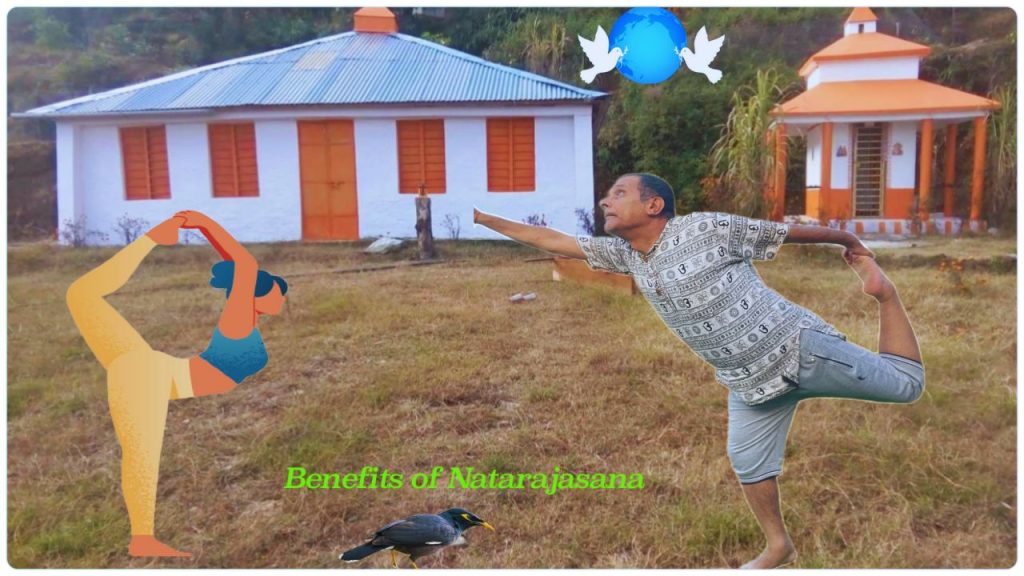
Benefits of Natarajasana (Dancer Pose) Regular and systematic practice of Natarajasana, or the Dance Pose, offers many benefits, including improved balance, flexibility in the hips and hamstrings, and strengthening the bones of the arms and legs, and shoulders. It reduces stress, calms the mind, increases concentration, and increases energy. Physically, it helps with digestion, blood circulation, and, while stimulating the digestive system, it also contributes to weight loss.
By practicing Natarajasana, we get many physical, mental, and other benefits, which I would like to present in a bulleted manner. 1. Physical Benefits
Standing on one leg helps a lot in building and maintaining stability and physical balance, while such a balancing act increases mutual coordination of various parts of the body.
b. Strengthens muscles
It strengthens all the muscles, strengthens the legs, waist, knees, ankles, and core muscles. The arms and shoulders are also toned and exercised. To get the full benefits, it is necessary to practice regularly and regularly.
c. Increases flexibility in the body
It stretches the quadriceps of the spine, shoulders, waist, and other parts in particular, promoting a greater range of motion.
d. Promotes good posture and body structure:
It improves spinal alignment and helps in maintaining proper posture by strengthening and stretching the back muscles.
E. Increases and regulates blood circulation in the body
It increases energy and vitality by opening up our entire body, which improves blood flow. Practicing Natarajasana along with Pranayama is even better.
F. Helps in regulating digestion
By regulating, stimulating, and toning our abdominal organs, Natarajasana helps in improving the digestive system. It is an excellent remedy for controlling 3 types of diseases, like Kapha, Bhat, and Pitta.
2. Mental and emotional benefits
A. Natarajasana reduces anxiety and stress
This asana not only provides physical but also mental peace and happiness, calms the mind, reduces stress, and promotes inner stability, which helps in increasing our courage, patience, kindness, and compassion.
B. Increases and maintains focus and concentration
Its balancing effect is necessary to focus, which improves mental balance, clarity, and concentration. Increases the ability to focus on any subject.
C. Increases mental energy and mood
This asana increases energy levels, fights fatigue, and promotes a sense of confidence and empowerment. Physical and mental energy are essential elements for leading a healthy and peaceful life.
3. Some other benefits
a. Helps in reducing body weight
Natrajasana can be effective in reducing our body weight and reducing obesity. Unnecessary fat and bad proteins present in various parts of the body are processed, thereby controlling body weight.
b. Activates and stimulates internal organs
Natrajasana activates our pituitary gland and thyroid gland and has a rapid and positive effect on the hormone-producing functions of organs like the kidneys and pancreas.
c. Increases energy and makes other yoga asanas easier
Regular practice can lead to more balanced movements and overall higher energy levels
How to do Natarajasana
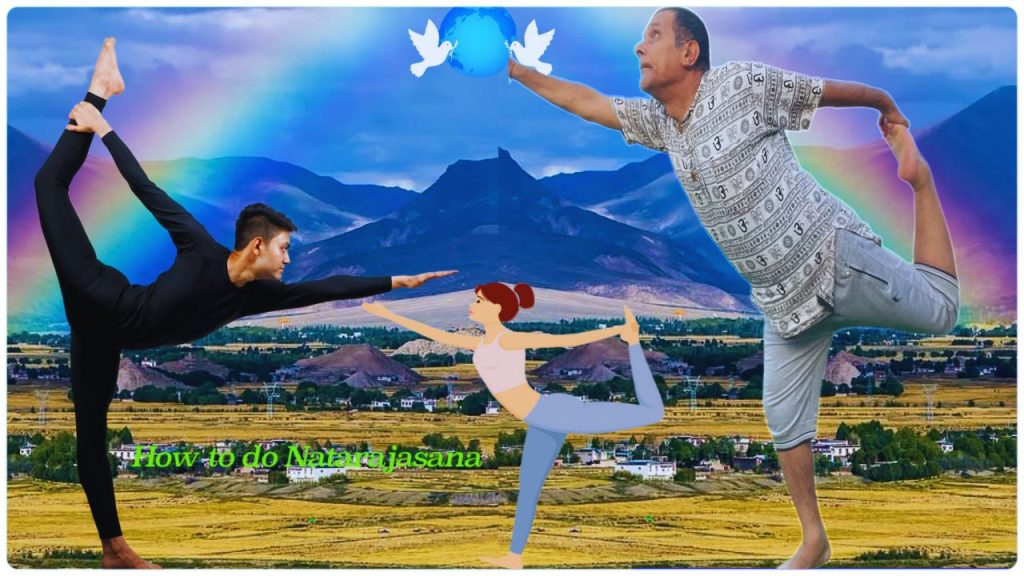
To do Natarajasana (Dancer’s Pose), first stand in Tadasana, placing your entire body weight on one leg. Bend the other knee, and slowly lift the heel toward your buttocks. Hold the ankle of the lifted leg with your right hand, then extend the opposite hand up and forward. Lift the leg and hips by stretching. Kick the leg with your hands, keeping the standing leg strong to create a backward bend. Hold the pose, focusing on a fixed point to maintain physical balance, and then slowly release.
Natarajasana Practice Precautions
If you have any excessive pain in your back while doing Natarajasana, you should not do it easily. This improves general pain
If you experience shoulder pain, lower back pain, or knee pain from this asana, you may not practice it. It should also not be done in a state of acid and gas in the stomach, as the abdominal muscles are also stretched. Any asana should be done on an empty stomach or 3 hours after eating.
Conclusion
Natarajasana is a very important yoga posture. This asana was created by Lord Shiva and was given as a contribution to the welfare of the people. Lord Shiva is also addressed as the king dancer in the Vedas and Upanishads. It is very important for the common people to practice it daily and regularly. It is especially important to pay attention to the rules, food and water intake, etc. If it is not done properly, sometimes it can be harmful rather than beneficial.
While practicing Natarajasana, do it on an empty stomach. If it is not suitable, do it only 3 hours after eating. If you have broken bones, joints, or experience severe swelling and pain, practice it only lightly or only after the problem is resolved following treatment. It is also important to wear loose clothes and do it in a clean and airy place. Let’s practice yoga only after paying attention to everything and being careful.