
Table of Contents
What is meditation?

Meditation is the practice of keeping the mind focused and alert. It helps people achieve mental peace, self-awareness, and inner balance. Principles of Meditation have been practiced since ancient times. Especially in Hinduism and Buddhism, meditation is considered a means of self-development and liberation.
The specific meaning of meditation can be indicated as follows: The word ‘meditation’ is derived from the Sanskrit word “dhyan”, which means to think, contemplate, or focus the mind on a single subject. Meditation is:
Keeping the mind steady in the present moment, avoiding unnecessary thoughts, achieving self-realization and peace
Special Principles of Meditation
The main principles of meditation include present-moment awareness, non-judgmental observation, and the practice of continuous and regular controlled breathing to calm the mind, reduce stress, and increase self-awareness. Gentle redirection of attention is needed when thoughts are wandering, not to force the mind into stillness but to maintain ease.
Origin of Meditation
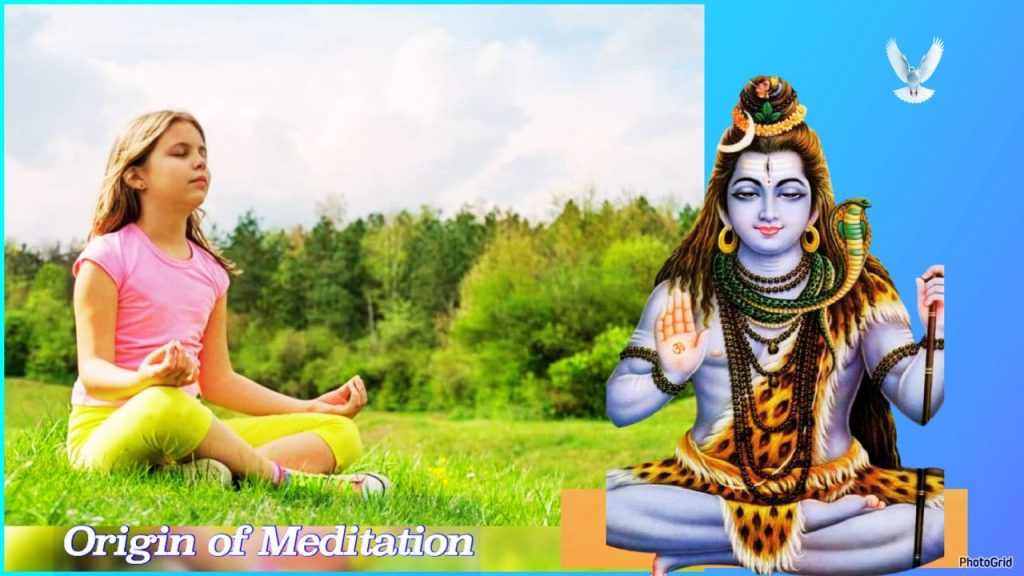
Meditation originated with human civilization. Meditation is a very old and profound spiritual practice of human civilization. The method of making the mind focused, calm, and alert is called meditation. Although meditation is popular all over the world today for health, mental balance, and self-development, its roots are buried in religious and philosophical traditions that are thousands of years old.
The earliest mention of meditation is found in ancient Vedic texts. The Vedas and Upanishads describe the importance of meditation and contemplation to gain knowledge of the soul and Brahman. At that time, sages used to sit in the forest and meditate. Meditation was the main method of self-peace.
As time passed, in the Puranic period, Lord Krishna explained the importance of meditation to Arjuna in the Bhagavad Gita. According to the Gita, meditation is a necessary practice to control the mind and experience the ultimate truth. Meditation is a practice that cleanses and calms the human mind. Meditation had special importance in ancient times
Meditation tradition

Gautama Buddha made a great contribution to the development of meditation. He practiced deep meditation in Bodh Gaya to gain enlightenment. In Buddhism, ‘Samatha’, quiet meditation, and ‘Vipassana’, insight meditation, are the main methods. It is good to study the subject of Buddha when studying deeply.
Buddha’s teachings established meditation as not only a religious practice but also a practical way to get rid of suffering. Even today, Vipassana meditation is widely practiced in many countries. No matter how you meditate, you get peace and strength in the mind. The followers of Buddha started spreading the importance of meditation in the world from that time.
Jainism and other Eastern traditions
In Jainism, meditation is also considered a means of self-purification and liberation. Asceticism, restraint, and meditation are the basis of Jain meditation. The meditation tradition spread along with Buddhism in China and Japan. Especially, ‘Chan’ meditation became famous in China, and ‘Zen’ meditation in Japan. As time went by, various organizations of meditation lovers have also been formed
Meditation in the Western World. After Swami Vivekananda gave a speech at the Parliament of the World’s Religions held in Chicago, USA, towards the end of the nineteenth century, interest in yoga and meditation increased in the West. Along with this, the number of followers also increased. While meditation is associated with spirituality in Eastern philosophy, it also started to have its own mentality in the West.
In the twentieth century, meditation began to be studied from a scientific perspective. ‘Mindfulness’ meditation is now used to control stress, improve mental health and increase efficiency. Various health centers also started to make meditation a tool for mental treatment. Universities in countries like the US and Canada also started to conduct experimental classes.
The real peace that comes from meditation, specifically, comes not from external circumstances, but from a change in inner consciousness. It is not just a momentary relaxation, but a profound change in the way we look at life.
Key aspects of peace gained from meditation
1. Mental Calmness and stability.
Meditation gradually calms restless thoughts. The habit of constantly thinking decreases and the mind becomes clear and light.
2. Emotional Balance
Control over emotions such as greed, anger, anxiety, fear, and dissatisfaction increases. Even when the situation is difficult, inner balance is maintained, and peace remains.
3. Self-satisfaction and Self-Awareness
The ability to understand one’s thoughts, feelings, and behavior increases. This helps in making the right decisions.
4. The art of living in the present moment
Meditation teaches us to focus on the present moment by freeing us from past regrets and future worries.
5 Inner Joy and Patience
It does not depend on external objects or success. It feels light, satisfied, and complete even without a reason.
What is real peace?
Even if there are problems outside, there is stability inside.
The behavior of others does not immediately affect you.
You feel gratitude even in small things.
The power to accept life increases.
The state of meditation in the world. In the present era, meditation has developed on a spiritual and religious basis in Nepal and India. But in Western countries, meditation is used as a scientific tool to increase mental health and productivity. The methods are based on Eastern philosophy.
The main objective of all methods is: peace of mind, self-awareness and improvement of the quality of life.
Meditation Vedic & Buddha
Samatha meditation method based on Sanatan Vedic principles and Buddhist tradition in Nepal and India. Especially Kundalini Yoga, Vipassana meditation, practice of focusing on breathing to understand the reality of the mind and body. Etc. The practice of meditation increases the effectiveness of health. Reduces stress and anxiety Increases self-awareness
Yoga and meditation help in controlling anger and impulses. They increase mental peace and concentration. Practices that stabilize the mind at one point, such as lamps, mantras, and compassion, awaken the feeling of awareness. No matter what country and society practices different styles, the benefits of health and peace are the same
Conclusion
In conclusion, both yoga and meditation are extremely beneficial practices for physical, mental, and spiritual health. Regular practice makes life balanced, healthy, and positive. The main benefits include improved physical health, the body becomes flexible and strong, and the immune system increases. Mental peace reduces stress, anxiety, and depression.
Emotional balance fosters patience, confidence, and a positive outlook. Concentration increases. Meditation stabilizes the mind and helps to focus on work. Overall lifestyle improvements – discipline, good sleep, and healthy habits develop. Including yoga and meditation in daily life helps keep both the body and mind healthy, allowing one to achieve peace and happiness in life
Next Post: Meditation for good sleep is useful