
Table of Contents
Great sage Patanjali
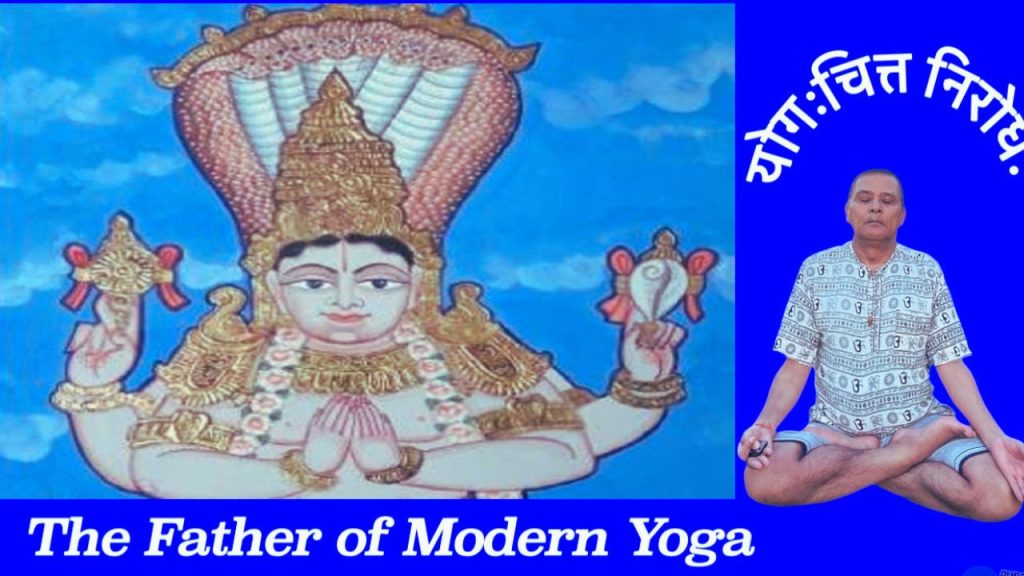
The father of modern yoga is Maharishi Patanjali. Maharishi Patanjali is a prominent figure in ancient Nepal and Indian history. He is revered as a sage and as an incarnation of Adishesh Naga, the eternal “remaining serpent” cosmic serpent on which Lord Vishnu rests. Once upon a time, while Lord Vishnu was watching Lord Shiva perform a cosmic dance, Adishesh found it challenging to carry Vishnu’s burden due to Shiva’s powerful energy.
Curious, he asked Lord Vishnu about the secret of this. Vishnu explained that Shiva’s harmony arose from his yoga practice. Realizing the value and benefits of yoga, Adishesh chose to be born on earth as Patanjali. He aimed to share the knowledge of yoga with humanity. Patanjali was a great spiritual leader who defined the steps required for every soul to embark on a journey back to the eternal self or supreme consciousness and laid the foundation for modern yoga.
A Divine Incarnation of Patanjali
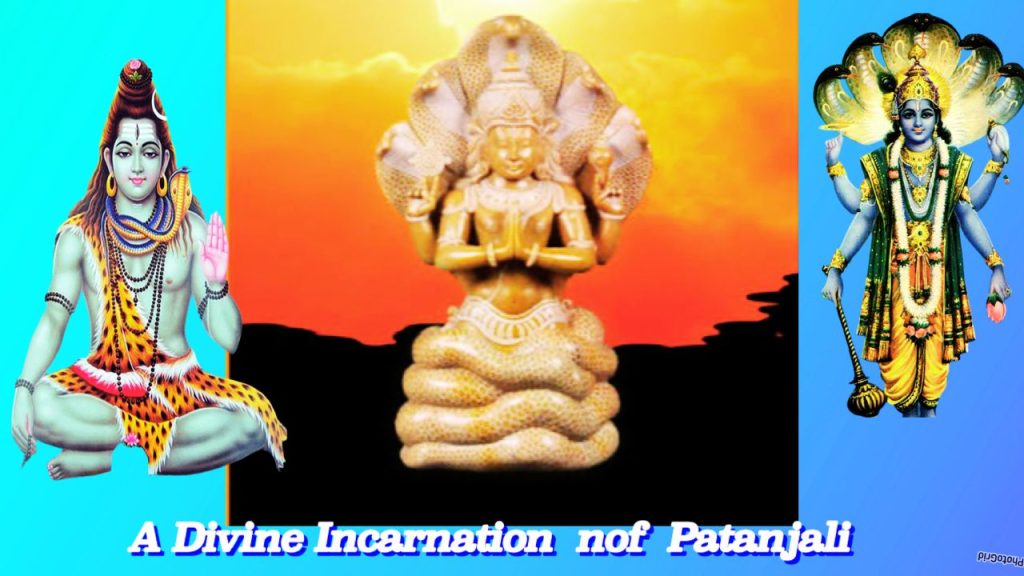
The great sage Patanjali was born miraculously, who is the father of modern yoga. According to a popular legend, Patanjali was not born normally. He is said to have descended from heaven as a small snake into the hands of a devoted woman named Anjali. This divine event inspired his name: Patanjali is derived from the Sanskrit words pat, which means to fall, and anjali, which means to hold hands in prayer or devotion.
Miraculously, he could speak from the moment he was born. Speaking normally, he gave divine teachings on human health through his yoga meditation, which are still followed not only by people in Nepal and India but also by people around the world.
Another famous legend also describes a different miraculous birth for Patanjali. Gonik, a devoted yogini, had a fervent desire for a son to pass on her knowledge. One day, while praying and offering water to the Sun from his cupped hand, a small snake appeared, transformed into a human child, and became his son. As a result, Patanjali is often called “Gonikaputra”, which means “son of Gonika”.
Patanjali’s Life and Contributions
I have studied many Puranic facts about the life of Maharishi Patanjali. The accurate historical details are largely consistent with what is written in all the Puranas and texts. Traditional accounts state that he visited numerous regions, including Nepal, Kashmir, Sri Lanka, and various places across India, and raised awareness in the society of that time through special yoga meditations.
Puranic textssuch as Matsya Purana, Vayu Purana, and Skanda Purana, suggest that Patanjali lived between about 500 BCE and 200 BCE, during the time of great sages like Vyasa and Panini. Regardless of the place and time of his life, he is believed to have fulfilled his self-determined destiny.
There are many stories about the sage Patanjali, but historical facts are scarce. One story mentions his marriage to a woman named Lolupa. But the biggest thing was that Patanjali, as God, inspired society and the people to practice yoga and meditation.
Intellectual Contributions by Patanjali.
Reasons why Maharishi Patanjali is known as the father of modern yoga and meditation are mentioned below
Yoga Sutras Maharishi Patanjali is traditionally recognized as the author of the Yoga Sutras, the foundational text of classical yoga philosophy. Patanjali’s Yoga Sutras are highly influential in Hindu philosophy, often called Raja Yoga, meaning royal yoga
The text comprises 196 concise sutras, divided into four chapters, each of which can be considered a specific aspect of yoga practice and philosophy. Evidence suggests that the compilation probably took place between 500 BCE and 200 BCE. The chapters of the Yoga Sutras are as follows:
Sadhana Pada: The eight limbs of yoga, which describe the path of Ashtanga Yoga, focus on practices for achieving spiritual development.
Samadhi Pad discusses the importance of Samadhi. A state of deep meditation leading to spiritual unity that can be practiced even in the final stages of human life.
Vibhuti Pada explores the various supernatural powers (siddhis) that can be attained through continuous yoga practice
Kaivalya Pada explains the ultimate goal of yoga, liberation (moksha), complete freedom from worldly limitations
Ashtanga Yoga
The Sanskrit word “Yoga” means “to yoke” or “to unite.” A yoke joins a pair of animals, allowing them to pull a cart together. It unites the animals to the cart and controls their movement. Similarly, yogic practice unifies and controls the body, breath, senses, and mind. This internal discipline prepares practitioners for deeper meditation and ultimately supports the pursuit of liberation.
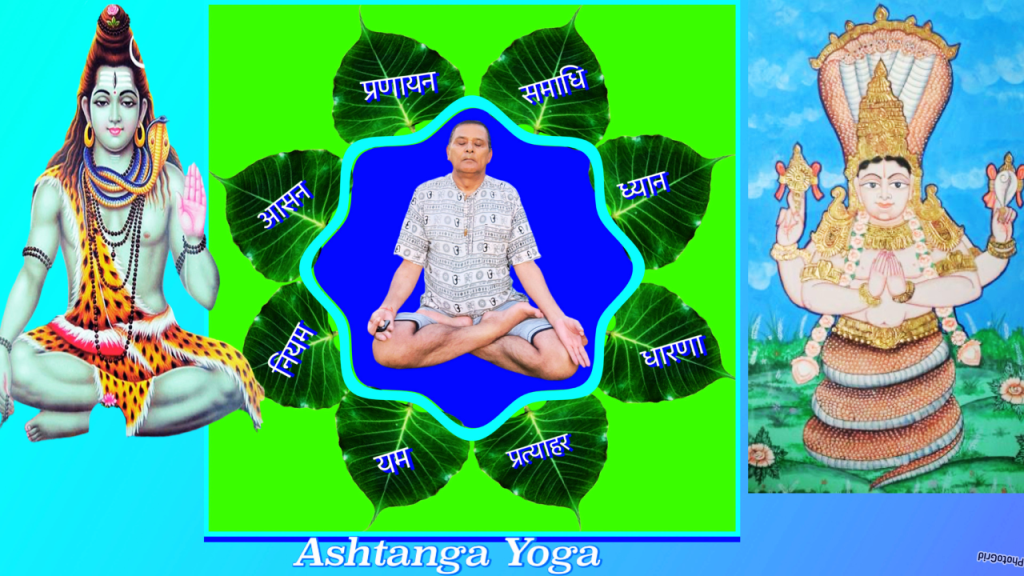
In the Yoga Sutras, Patanjali outlines eight distinct steps known as Ashtanga Yoga. These guide spiritual seekers toward liberation and self-realization:
Yama (यम) Ethical guidelines for social interaction, including non-violence and truthfulness.
Niyama( नियम) Personal disciplines that cultivate purity, contentment, self-discipline, and spiritual study.
Asana(आसन) Physical postures that prepare the body to sit comfortably for meditation.
Pranayama(प्रणायम) is a breath control techniques that regulate and increase vital energy.
Pratyahara: Withdrawing the senses from external objects to increase inner awareness.
Dharana: Focusing the mind on a single object or thought, deepening concentration.
Dhyana (ध्यान) Sustained attention leading to absorption and clarity.
Samadhi(समाधि) A state of complete unity and spiritual oneness, where personal awareness merges with universal consciousness.
Brief Conclusion
Patanjali’s personality was very deep, disciplined, and spiritual. He presented yoga as a means of the development of the mind, soul, and consciousness, not just a physical practice. His famous book Yoga Sutra, explains the principles of yoga systematically and scientifically.
For this reason, he is known as the “Father of Modern Yoga”. His teachings guide people to live a stress-free, healthy, and balanced life even in today’s era.
Patanjali established yoga as a lifestyle, which has made a significant contribution to making the modern era yogic, peaceful, and positive. I would like to say that everyone should follow yoga meditation and live a peaceful life.
In today’s hectic times, people seem to be very busy and stressed. Only yoga can control stress.
Next Post:Ashtanga yoga practice