
Do Vajrasana regularly to live a healthy and disease-free life
Spacial yogasana
Table of Contents
Yoga is an ancient natural method to keep our body, mind, and soul healthy, calm, and balanced. Practicing yoga regularly increases flexibility, strength, and vitality in the body and also helps reduce mental stress. Among the various yoga asanas, Vajrasana is a simple, effective, and special asana. Compared to many other asanas, one of the features of Vajrasana is that it can be done for a certain period of time even after eating, so it is considered a useful practice for those who want to keep the digestive system healthy
The word ‘Vajra’ means firm, powerful, or unwavering. This asana is called Vajrasana because it helps to stabilize the body, calm the mind, and discipline the lifestyle. If practiced regularly and correctly, it can have a positive effect on the lower body, knees, ankles, digestive system, and mental stability.
1. Introduction to Vajrasana
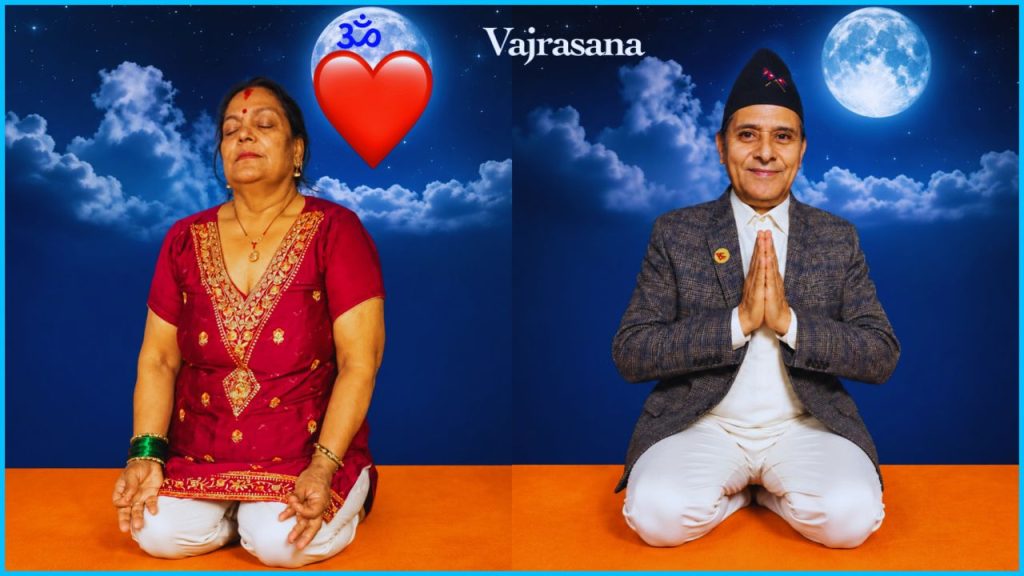
Vajrasana is a simple yoga pose performed by bending the knees and sitting on the heels. In this, both knees are joined or placed at a comfortable distance, the toes are kept straight behind the back, and the buttocks are placed on the heels. The spine is straight, the head is relaxed, and the vision is kept forward or with the eyes closed.
Although this asana looks very ordinary from the outside, it helps to develop concentration, patience, and self-discipline as the body needs to be kept still while practicing it. Sitting in Vajrasana for some time before meditation, pranayama, and other yoga exercises can prepare the body and mind for the practice.
Especially people who work in a chair for a long time, students, teachers, and elderly people can practice it according to their physical condition. However, it is appropriate for people with knee or foot problems to practice it only after consulting a specialist.
2.
Vajrasana does not require much preparation. You can practice by laying out a yoga mat or soft seat in a clean, flat, and quiet place.
Procedure for doing Vajrasana
Step 1:
Sit on the yoga mat in a standing position with your knees bent. Keep both knees in a comfortable position.
Step 2:
Keep both feet straight behind you. Then slowly sit with your buttocks between or on both heels.
Step 3:
Place both hands comfortably on your knees. Palms can be placed either downwards or upwards.
Step 4:
Keep your spine as straight as possible. Do not hunch your shoulders, keep your chest relaxed, and keep your neck straight.
Step 5:
Close your eyes and breathe naturally and exhale. You can focus on your breathing.
Step 6:
Initially, sit for only a few minutes. You can gradually increase the time as your body starts to accept it.
Step 7:
Do not rush when coming out of the asana. First, move your body forward a little and slowly stand up with the help of your hands and straighten your legs.
Breathing
Do not hold your breath while sitting in Vajrasana. Practice inhaling and exhaling easily through your nose. Long, deep, and easy breathing helps to calm the mind and focus your attention.
3. Benefits of Vajrasana
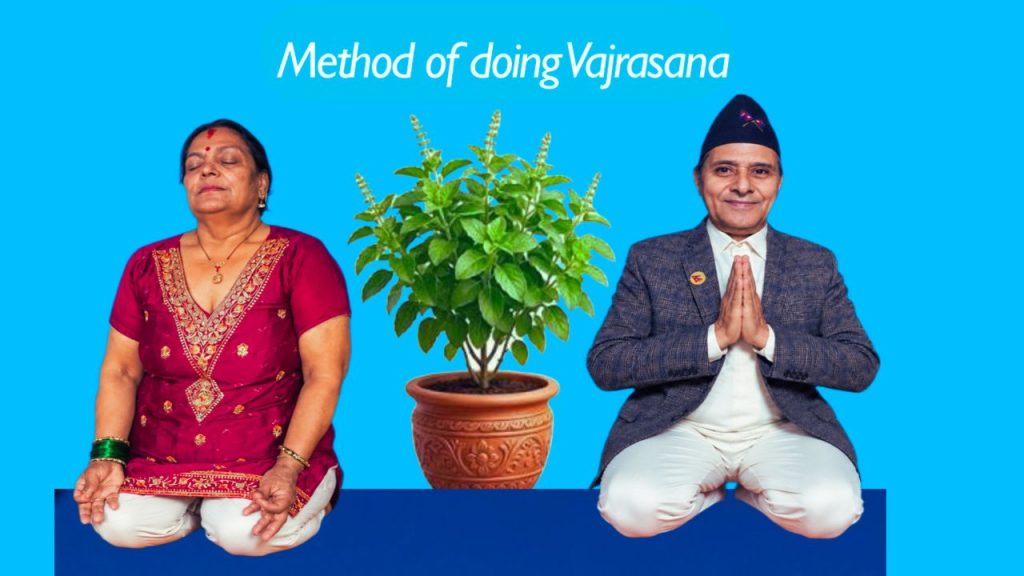
Practice Vajrasana regularly, with the right technique and according to your physical ability, and you can achieve various benefits.
1. Helps the digestive system
The main feature of Vajrasana is considered to be related to digestion. Sitting comfortably in Vajrasana for some time after a meal can help the digestive process. Some people may also feel relief from common digestive discomforts such as bloating and indigestion.
2. Peace of mind and concentration
Keeping the body still in Vajrasana and focusing on the breath helps to calm the mind. Regular practice can help develop concentration and mental discipline. This can be a useful asana for students and people who practice meditation and pranayama.
3. Habit of keeping the spine straight
Sitting in Vajrasana is a practice of sitting in the right posture because the spine needs to be kept straight. People who have a habit of sitting in the wrong posture for a long time can use it as an exercise to improve their posture.
4. Lower body flexibility
Practicing correctly, taking into account the structure of the knees, ankles, and feet, can help maintain flexibility in the lower body. However, it should not be forced if there is already pain or injury.
5. Useful for meditation and pranayama
Since Vajrasana is a stable posture, it can be a convenient base for meditation and various pranayamas. Keeping the body stable and paying attention to breathing can make it easier to focus the mind inward.
6. Helps reduce stress
Sitting in Vajrasana for some time in a quiet environment and taking deep and easy breaths can relax the body and mind. This can help manage the mental stress that occurs in daily life.
7. Developing discipline and patience
Yoga is not just a practice of bending the body; it is also a lifestyle. Regular practice of Vajrasana can inspire the development of qualities such as punctuality, patience, stability, and self-discipline.
8. Special asanas to do after meals
Many yoga asanas are recommended to be done on an empty stomach. Vajrasana is especially known as an asana used for sitting comfortably for a short period after a meal. For this reason, easy Vajrasana can be useful as an alternative to the habit of lying down immediately after a meal or sitting in a chair for a long time.
4. Precautions to be taken while doing Vajrasana
Although yoga is a natural and beneficial practice, problems can arise if practiced incorrectly or beyond one’s ability. Therefore, special attention should be paid to the following points while doing Vajrasana.
First, if you have an injury, severe pain, or a condition of recovery after surgery in your knee, ankle, or foot, practice only after consulting a doctor or yoga specialist.
Second, do not try to sit for a long time at first. It is better to start with a few minutes and increase the duration only after the body accepts it easily.
Third, if you feel excessive pressure on your knee or ankle, do not forcefully sit in the asana.
Fourth, do not stiffen your body unnecessarily even if your spine is straight while sitting in the asana. It is necessary to keep the body comfortable and relaxed.
Fifth, do not get up suddenly when getting up from the asana. Get up slowly by straightening your legs.
Sixth, stop the practice if any asana causes severe pain, swelling, dizziness, or discomfort.
Seventh, it is advisable for people with serious health problems to practice yoga with the advice of a health professional, rather than taking it as a substitute for medical treatment.
5. Do Vajrasana regularly, live a healthy life
A healthy life does not require huge expenses, expensive equipment, or complex exercises. Even if some simple and natural exercises can be incorporated into daily life with discipline, positive changes can be brought about in health. Vajrasana is one such simple exercise.
In today’s busy life, people spend a long time sitting on mobile phones, computers, and chairs. Irregular eating, lack of physical activity, stress, and insufficient sleep can negatively impact health. In such a situation, making yoga a part of daily life can be useful.
In the morning or evening, you can sit in Vajrasana in a quiet environment and focus on breathing for some time. You can develop the habit of sitting in Vajrasana for a while after meals to help the body feel comfortable. Along with this, it is necessary to adopt regular walks, a balanced diet, adequate sleep, positive thinking, and a disciplined lifestyle.
The real purpose of yoga is not only to prevent disease; It is also to make the body healthy, the mind calm, the intellect wise, and the life disciplined. Therefore, yoga should not be a one-day program, but a daily lifestyle.
Conclusion
Although Vajrasana is simple, its importance is profound. It is a useful yoga asana in terms of stabilizing the body and calming the mind, preparing the basis for meditation and pranayama, and aiding the digestive process. Regular practice can inspire one to build a healthy lifestyle.
But no yoga asana should be understood as a miracle cure. Yoga can help in maintaining health and improving lifestyle; in case of illness, necessary medical examination and treatment are equally important.
Therefore, let us make a simple resolution from today—
“Let us do yoga, stay healthy; let us live a disciplined life, and build a healthy society.”
The journey of a healthy life that begins with a few minutes of regular Vajrasana can gradually progress towards other yoga asanas, pranayama, meditation, a balanced diet, and a virtuous lifestyle. Let us become healthy, make our families healthy, and contribute to building a healthy, peaceful, and cultured society.
Do Vajrasana regularly, keep the digestive system active;
Let us live a healthy and happy life by adopting yoga, restraint, and morality.”
Next Post
: Lifestyle and Yoga