
Table of Contents
Spiritual and Cultural Importance of Rishi Tarpani, Yoga, Meditation, and Wearing of Yajnopavit Dharan
1. Introduction and Importance of Rishi Tarpani
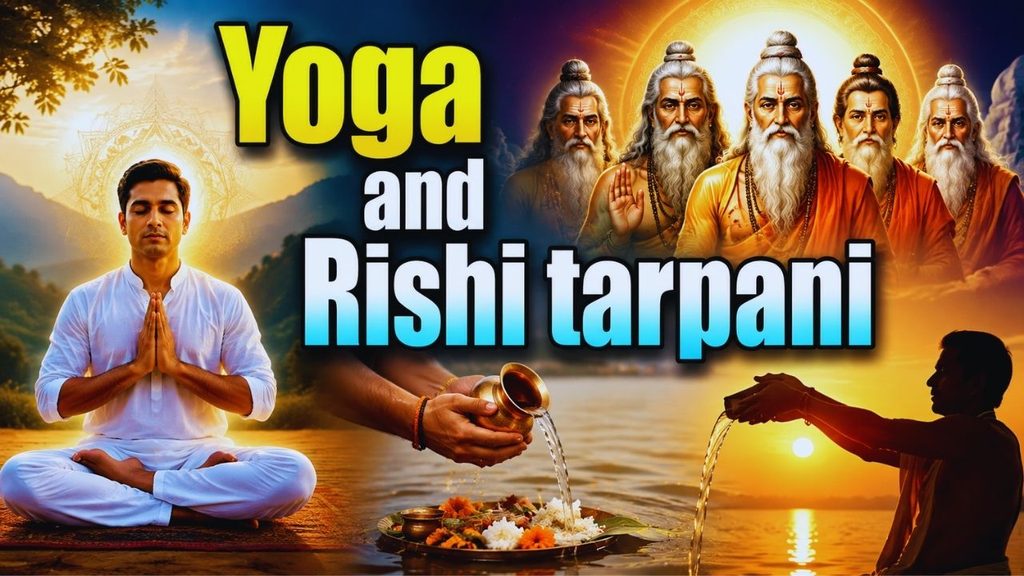
Rishi Tarpani, i.e., Janai Purnima, is a very important festival in Hindu and Vedic traditions. Celebrated on the full moon day of Shravan, this festival is celebrated by various communities of Nepal according to their own religious, cultural, and social traditions. This day is also known as Rishi Tarpani, Raksha Bandhan, Janai Purnima, and Kwanti Purnima, etc.
The name ‘Rishi Tarpani’ itself makes its essence clear – to show respect, gratitude and remembrance towards the sages, gurus and sources of knowledge. It is an opportunity to express respect for the contribution of the great sages who have preserved and passed on Vedic knowledge, rituals, philosophy, yoga, Ayurveda, spiritual practices and life-giving knowledge for generations.
On this day, especially those who wear the Yajnopavit, there is a tradition of bathing in the morning and purifying themselves by remembering the sages, offering tarpan, worshiping them, and changing the Yajnopavit. This ritual sends a message that a person should dedicate his life not only to personal happiness but also to knowledge, duty, discipline, service, and virtue.
Another important aspect of Rishi Tarpani is self-purification and determination. Changing the old one and wearing the new Yajnopavit is not just an external change; it is also a symbolic resolution to make the mind, speech and actions more pure and disciplined.
2. Yoga Administrator Maharishi Patanjali
The history of yoga is very ancient. Rather than being invented by a single person, it is more appropriate to understand yoga as a philosophy of life developed by sages through long practice, experience and research. However, the great sage Maharishi Patanjali, who presented yoga in a systematic, formulaic and scientific manner, is respected as the main teacher of yoga philosophy.
Maharishi Patanjali presented the principles and practice of yoga in a very concise and profound formula through the ‘Yoga Sutra’. His famous formula—
“Yogaschittavrttinirodha”
i.e., the control or restraint of the mental faculties is yoga—explains the real depth of yoga.
Patanjali’s Ashtanga Yoga has eight limbs, namely Yama, Niyama, Asana, Pranayama, Pratyahara, Dharana, Dhyana and Samadhi. This makes it clear that yoga is not just a practice of stretching the body or performing various asanas. Yoga is a holistic way of life that disciplines the body, breath, mind, intellect, and consciousness to move forward on the path of spiritual progress.
Therefore, Maharishi Patanjali can be called the ‘manager’ of yoga or the great systematizer of yoga philosophy in the modern sense. He has formulated various aspects of yoga and left a treasure trove of invaluable knowledge for future generations
3. Yoga, Meditation and Yajnopavit (wearing the jaanai)
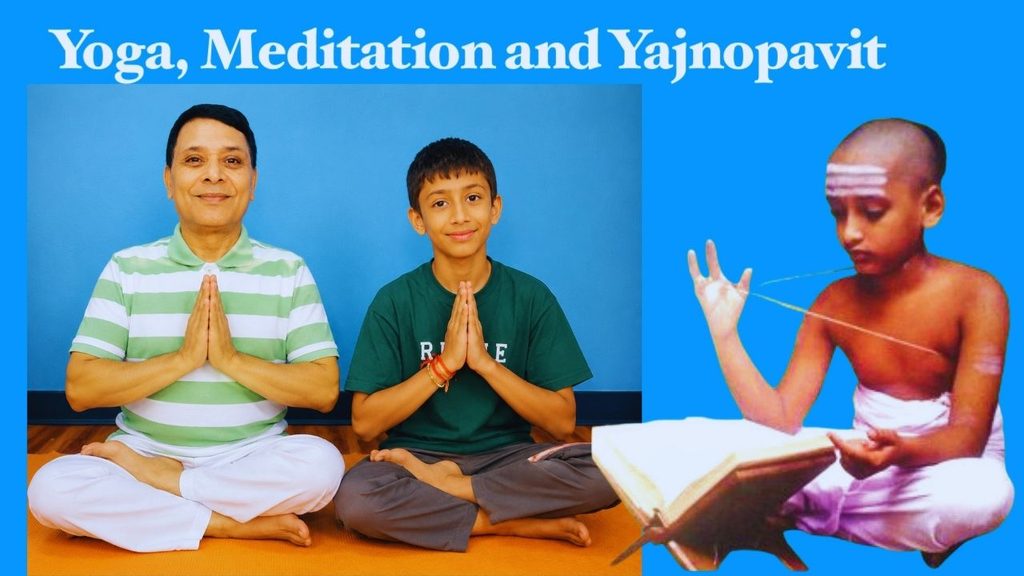
A deep spiritual connection can be seen between yoga and the ritual of wearing the jaanai. Both inspire people towards discipline, self-control, pure conduct and a higher life goal.
The jaanai is generally worn as a sacred thread with three strands. Its religious interpretation varies according to tradition. It can be broadly understood as a symbol of duty, knowledge, discipline, respect and responsibility towards the guru-rishi-ancestor.
However, its purpose is not fulfilled by simply wearing the jaanai on the body. Its real importance lies in putting the virtues and duties it reminds of into practice in life.
Similarly, meditation is an important part of yoga. Meditation concentrates the mind, reduces restlessness and increases the ability to introspect. The resolve and meditation exercised while wearing the jaanai can make a person aware of his thoughts, behavior, and actions.
On the occasion of Rishi Tarpani, the festival can become more meaningful if one spends some time in silence, meditating, practicing pranayama, remembering the contributions of one’s gurus and sages, and self-evaluating what one has done well in life and what needs to be improved.
In this way, Jana is not just a thread that remains in the body, and yoga is not just a discipline of the mind; only when both are implemented in one’s life does their true meaning become apparent.
4. Rakshabandhan and Yagyopavit (Janai) Dharan
Another popular aspect of Janai Purnima is Rakshabandhan. On this day, it is customary to tie a rakhi or rakshasutra between brothers and sisters as a symbol of protection, love, trust, and harmony. Although its method and form differ in different communities of Nepal, the basic sentiment is mutual love, protection, good wishes, and family unity.
Similarly, in the Vedic tradition, there is a tradition that the person wearing the Yajnopavit takes a special bath, cleanses, remembers the sages, and offers tarpan and then wears a new Yajnopavit. This is also understood as a religious ritual linked to the Upanayan and Yajnopavit Sanskar.
While wearing the Yajnopavit, a person should resolve to prioritize knowledge and morality in their life, respect the knowledge of the Guru and sages, walk on the path of truth and duty, and be responsible towards society.
The social aspect of this festival is also equally important. On the day of Janai Purnima, family members gather together, meet relatives, eat delicious food, and exchange greetings, which strengthens family ties and social harmony.
This festival also has a special place in the diversity of Nepal. From the Himalayas to the Terai, various communities celebrate Shravan Purnima according to their original traditions and beliefs. It highlights the unity within the religious, cultural, and social diversity of Nepal.
Therefore, Raksha Bandhan should not be limited to just the festival of tying a thread on the hand and Janai Dharan should not be limited to just the ritual of changing the thread. Its main message is “Let us protect each other, respect knowledge, do good deeds, and promote love and harmony in society.”
Conclusion
Rishi Tarpani is an important festival associated with our ancient knowledge, culture, rituals, and spiritual consciousness. It teaches us to be grateful to the sages, gurus, knowledge, and rituals. Wearing the Yajnopavit Dharan reminds us of duty and discipline, while Raksha Bandhan increases the feeling of mutual love, trust, and protection.
The philosophy of yoga organized by Maharishi Patanjali also takes a person on a journey from the external body to the internal consciousness. The journey from Yama-Niyam to meditation and Samadhi is actually a journey of self-discipline and self-improvement.
Today, science and technology have made human life much easier, but mental unrest, stress, incontinence, and family and social distance are also increasing. At such a time, the message of self-purification, restraint, gratitude, yoga, meditation, respect for the Guru, and harmony given by Rishi Tarpani has become even more relevant.
Therefore, in this year’s Rishi Tarpani, let us not only fulfill the tradition of wearing a new garment and tying the Raksha Sutra, but also make a good resolution – to purify the mind through yoga and meditation, keep the body healthy, sweeten our words, make our actions holy, respect the knowledge of the Guru and Rishis, and spread peace, harmony, and tolerance in society.
May the knowledge of the Rishis be our inspiration, yoga be our way of life, meditation be our means of inner peace, and Raksha Bandhan strengthen the bond of love and brotherhood in the entire human society.
“The knowledge of the Rishis, the practice of yoga, the discipline of the Sanskars—these are the foundations of building a healthy, peaceful, and civilized society.”