
Table of Contents
Introduction to Dhanurasana
Among the yoga asanas, Dhanurasana is an important asana that helps in making the body strong, flexible, and balanced. The word ‘Dhanurasana’ is made up of two Sanskrit words, ‘Dhanu’ and ‘Aasan’. ‘Dhanu’ means bow and ‘Aasan’ means to keep the body in a certain position. In this asana, the abdominal muscles are lying on the floor, and both the legs are held from behind with the hands, and when the chest and thighs are raised from the floor, the body shape looks like a stretched bow. That is why it is called Dhanurasana. It is mainly a backbend asana.
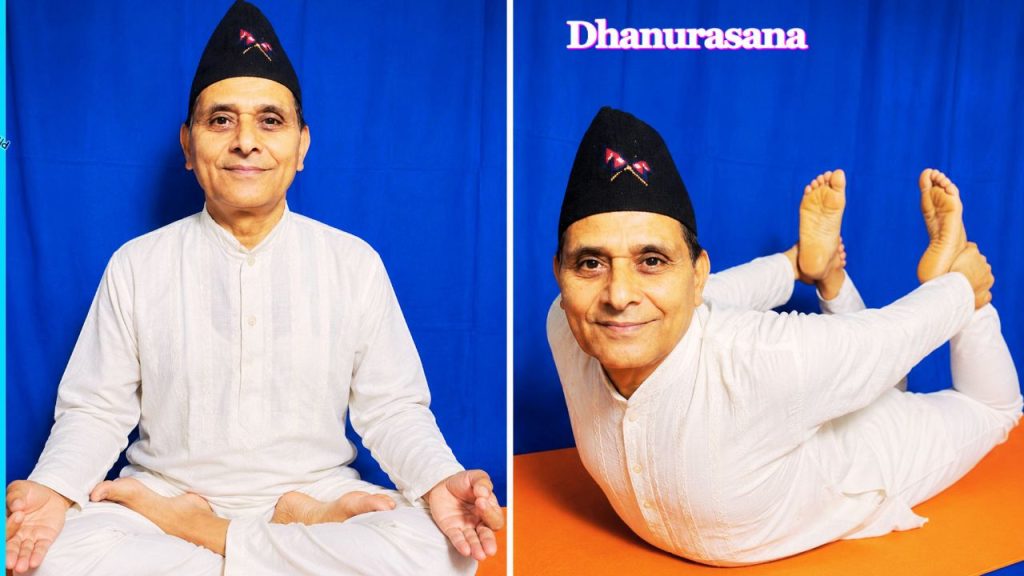
When practiced regularly and correctly, the muscles around the spine, shoulders, chest, stomach, thighs, and waist get good stretch and activation. In the yoga tradition, Dhanurasana is considered an asana that increases freshness, enthusiasm, and activity in the body. However, no yoga asana is a substitute for medicine but is a part of a healthy lifestyle. While doing asanas, it is very important to keep in mind the body’s ability, age, and health condition.
How to do Dhanurasana
To do Dhanurasana, first lie down on a yoga mat in a quiet, clean, and flat place. Keep both legs straight behind you and keep your hands comfortably by your sides. Then slowly bend both knees and bring the heels of your feet towards your buttocks. Now, take both hands back and hold the ankle of your right foot with your right hand and the ankle of your left foot with your left hand. Then, while taking a deep breath, lift your chest forward and upward and at the same time, pull your legs backward and upward.
When you pull your legs in this way, the chest, head, and front of your thighs rise above the floor, and your body takes on a bow-like shape. While in the asana, keep your breathing easy and natural; do not stretch beyond your capacity. Initially, you can sit comfortably for about 10-20 seconds and gradually increase the time. When you come out of the asana, exhale and slowly lower your body to the floor, release your legs, and sit in Makarasana or a relaxed position for a few moments. It is safer to practice under the guidance of a trained yoga teacher. Dhanurasana should not be performed forcefully, but with gradual practice, proper breathing, and ease of body.
Precautions to be taken while doing Dhanurasana
Although Dhanurasana is an effective asana, it is not suitable for everyone in the same way. Do not put excessive pressure on the waist, neck, or knees while doing the asana. Do not forcefully bend the body backward, forcefully pull the legs, or hold your breath for a long time. Initially, practice for a short time and according to your ability. People with pregnancy, recent abdominal or spinal injuries, serious knee/shoulder problems, uncontrolled high blood pressure, or other serious health problems should not do Dhanurasana without the advice of a doctor or qualified yoga specialist. It is also advisable to avoid this asana until completely healed in cases of surgery on the front of the abdomen. If you feel severe pain, dizziness, difficulty breathing, or unusual discomfort while doing the asana, you should immediately leave the asana and rest. Before doing Dhanurasana, it is better to do a light warm-up, especially light preparation exercises for the spine, shoulders, knees, and thighs. Dhanurasana should not be practiced immediately after a meal; in general, one should practice with sufficient time. The basic principle of yoga is to practice mindfully, not with pain. Therefore, the health of the body and mind should be prioritized over the competition to show perfection in the asana.
Health Benefits of Dhanurasana
Dhanurasana requires regular and correct practice to actively support various parts of the body. The spine, especially the lower back, helps to support the flexibility and activation of the back muscles. It can help with the mobility of the chest necessary for breathing. The muscles around the shoulders, arms, abdomen, thighs, and waist are also active. The general physical organizational system related to the five systems that seek to find tension in the abdominal treatment area, try to develop any disease.
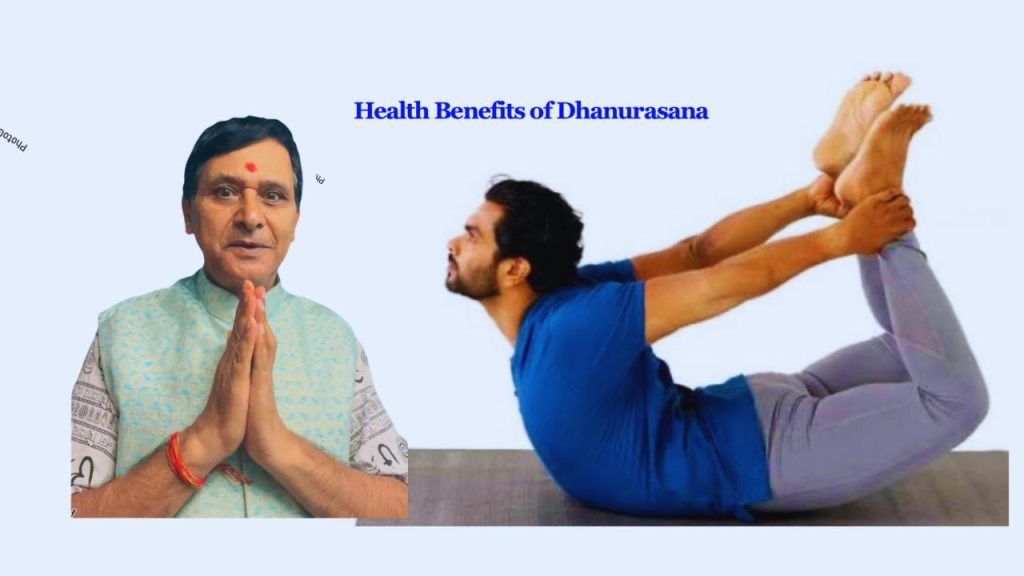
Dhanurasana can be useful as an active practice for people who sit for a long time and have little physical activity. It can help to improve poor body posture, or posture, and regular yoga practice can guide the body to feel refreshed and energized. Mentally, yoga practice can also help to reduce stress, improve concentration, and calm the mind. In Dhanurasana, a careful practice habit is developed by balancing breathing and body movements. But these benefits may vary from person to person.
Therefore, it is appropriate to promote Dhanurasana as a definitive treatment for any specific disease. When practiced in combination with a healthy diet, adequate nutrition, sleep, regular exercise, and other appropriate yoga asanas, its utility can be best.
Overall importance of studying Dhanurasana
Dhanurasana is not just a posture in the shape of a bow; it is also a yoga practice that connects the body, breath, and mind. In the modern era, sitting on a mobile, at a computer, or in a chair for long periods is increasing. Dhanurasana opens the development part of the body and activates the back part. For students, it is useful to keep the body active; for teachers and people who sit in the office for a long time, to reduce physical fatigue; for regular yoga seekers, to provide various kinds of help in studying asanas.
But in yoga, the same asana is the solution to all problems. It is better to study Dhanurasana at home, like Bhujangasana, Shalabhasana, Makarasana, Vajrasana, Padmasana, Pranayama and meditation according to your ability and needs. The real purpose of yoga is not just to bring the body into a working shape, but to develop a healthy body, a calm mind, a restrained life and a positive attitude. Therefore, Dhanurasana is considered a demonstration of health, discipline and self-awareness. Regularity, patience, correct technique and appropriate guidance are the successful foundations of this study.
Conclusion
Ultimately, Dhanurasana is an important yoga asana to help the body develop strength, flexibility, balance and awareness like a bow. This correct practice activates the spine, shoulders, chest, abdomen, thighs, and various muscles of the body and builds strength. More coordination between breathing and body movements can also help in relaxing the mind and concentrating. But to get the real benefits of Dhanurasana, the right method, regular study, and necessary precautions are very important. The body’s capacity is not too much straining asana yoga; understanding your body, keeping your breath easy, and gradually developing capacity is the right path to yoga. People with special health conditions or injuries should consult a qualified doctor and yoga specialist.
In today’s stressful and hectic life, it is necessary to make yoga an integral part of daily life. If you can set aside some time for yoga, pranayama, and meditation in a clean environment in the morning, you can make positive changes in your body, mind, and behavior. Dhanurasana is an important study of that. Therefore, to build a ‘healthy body, peaceful mind, and disciplined life’, let us practice Dhanurasana regularly with proper methods and precautions. Let us use yoga only as a treatment after illness, to prevent illness, to make the body active, to calm the mind, and develop it as a culture with a balanced mindset of life. Do yoga regularly, stay healthy, be happy, and spread peace and harmony in society.
Next Post: Lifestyle and Yoga: Living skill 55