
Table of Contents
What is the dignity of education
Hearing the name of education and the teaching profession, one feels sacred and dignity. Since ancient times, there has been a tradition of respecting teachers. For the effective and sustainable development of the teaching profession, reflection and policy work are effective. Critical reflective practice is used to improve learning, use subtle value judgment, and therefore to create a framework for the daily routine of teachers.
Policy for teachers

The essential policy was made by Dr. Andrzej Siroky. The synergy between independent learning and dignity was shown. Teachers themselves tell the students to start the teaching work honestly, that the learning level will not progress. There are various reasons for improving learning. For example, there is no market habit in society in general. Parents are not interested. Mobile has reduced the habit of studying outside. etc
However, teachers did not think that their teaching work was remembered. There is no review of the study from any other side other than the teacher. There is no review, feedback, monitoring, supervision, or external support. Therefore, it is necessary to develop a culture of self-evaluation of teaching work by teachers, to determine which activities were effective and which activities had less impact. Without this, pointing fingers at other parties and distant comments cannot improve learning. Instead, the flood of criticism from one’s own profession increases.
The goal of reflective teaching
The main goal of reflective dignity practice is to make teachers aware of the teaching and learning process, make them more accountable for their teaching work, increase teachers’ personal and professional competence, and develop the habit of conducting action-oriented research work related to classroom teaching. It would be good for all teachers to develop this habit. There can be various tools for reflective work
For example, dignity of education is achieved by documenting success stories, writing teaching diaries and student reflections, as well as using checklists, class observation review meetings, creating portfolio files, writing blogs, and publishing research articles. Teachers can improve classroom teaching and student learning levels and develop their professional capabilities. American professor Richard Rogers has written a book called
Teacher Professional Development based on the dignity insights gained from the comments written by teachers after class teaching. What did the teachers do in the classroom in those comments? What student learning and feedback did they receive while doing those tasks? And how can they improve now based on the results and feedback? It seems that the thought of “…is also included.”
Different perspectives and dignity
That is, if the teacher were to write a diary of about 500 words listing the activities they have done in the classroom, evaluating the impact of those activities, and mentioning possible measures for improvement, it seems that there would be a lot of improvement.lll
Action-oriented research
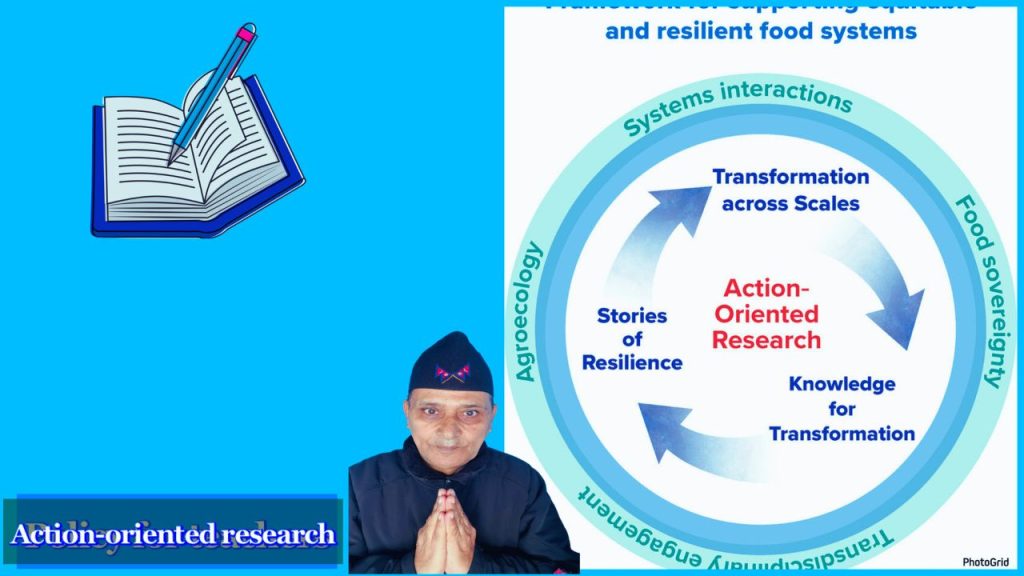
Another effective method of reflective practice is action-oriented research. The teaching profession is a dynamic field. The development and expansion of knowledge is happening at a rapid pace. Moreover, with the current pace of information technology, effective teaching seems to be possible only through the study and relevant use of new research and promotional work happening around the world.
Therefore, first of all, teachers should give up the pride that the knowledge they know and the methods they use are 100 percent correct. That is, they should be ready to evaluate their work. They should be able to identify both the positive and weak aspects of the work they have done. The reasons for the gaps in classroom teaching and learning should be found within the classroom rather than outside
The classroom and teachers should be able to question their own working style, efficiency, and performance. This ability is called self-evaluation or self-evaluation. This is the first condition of action-oriented research. That is, only teachers who are ready to look at their faces in the mirror can do reflective practice, action-oriented research, and professional improvement.
Presenting a paper as the keynote speaker at the Sri Lankan Teachers’ Conference 2024, organized by the British Council Colombo, British Professor Dr. Luke Hardinge emphasized that future teaching should be based on research, consumerism, and information technology. That is, teaching should be based on the perspective gained from contemporary studies and research rather than the traditional knowledge acquired
By teachers, developing knowledge and skills that address the needs of the learner, that is, the era, and education with digital literacy. 40 + research reports were presented at the conference, which lasted for 1 week. That is, the participants of this conference have proven that research work has been given high priority.
The effect of formal structure
Research work is not easily accepted due to the fear of formal structure. Research work carried out during classroom teaching can be carried out in a somewhat simpler way. Leaving aside some of the structural foundations necessary for the legitimacy of the research, the first step is to identify the positive and weak effects of classroom teaching and improve the strengths and weaknesses
Problem identification and prioritization decide which option is appropriate to solve the problem. Planning and implementing the option during classroom teaching, what was the effect of those measures? The observations what was the overall effect of all these actions? Reflect and, based on that, make a plan.
In this work, secondary sources can be used while selecting the option, evaluating the impact, and making a decision. Otherwise, since corrective work is done based on the teacher’s experience, this work does not need to be considered as a more formal structural analysis. If the ideas that are experienced during planning, implementation, observation, and reflection are noted and shared among the teaching community, they can learn from each other’s good practices.
Therefore, if teachers can self-evaluate and improve their own performance through reflective practices such as teaching diaries and action research, it seems that student learning levels will improve, as well as the professional development of teachers.
Conclusion
The dignity of education is a means to transform a person into a genuine human being. To get an education, a good teacher is needed. Since ancient times, the position of a teacher has been considered very prestigious. Not only education, but also teachers have been considered glorious. Teachers should adopt appropriate methods according to the time and context, and only if the student is willing to learn can success be achieved.
Next Post: Quality Education