
Table of Contents

Maharishi Patanjali and yoga
Maharishi Patanjali is the founder of Yoga. The Yoga Sutra is the basic text of Yoga philosophy. It is one of the six philosophies and the Yoga Shastras. The Yoga Sutras were composed by Patanjali 3000 years ago. For this, material already available on the subject was also used. The Yoga Sutras contain a rule to concentrate the mind and merge with God. According to Patanjali, preventing the tendency of the mind from being restless is yoga.
That is, not allowing the mind to wander here and there, but keeping it steady on one thing, is yoga. The Yoga Sutras are the most translated ancient Nepali and Indian text in the Middle Ages, which has been translated into about 40 Indian languages and two foreign languages. Patanjali’s Yoga Sutras are still being used and researched in the modern era
Pranayama- Breath Control
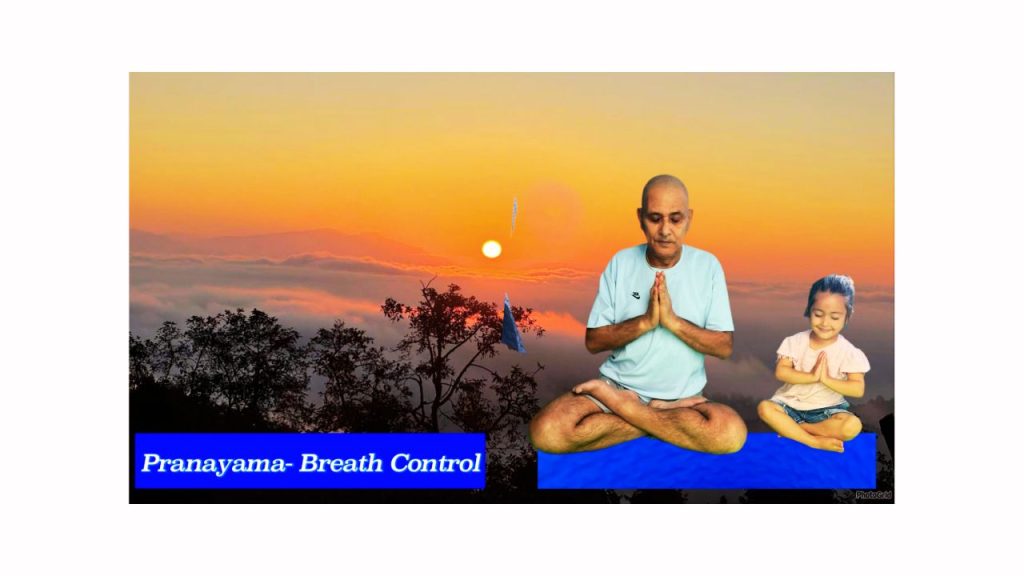
Pranayama is one of the eight limbs of yoga as defined by the great sage Patanjali. Pranayama (Sanskrit: प्राणायम, “प्राणायम”) is the yogic practice of controlling the breath in Hinduism. It is described in Hindu texts such as the Upanishads and the Bhagavad Gita; in Patanjali’s Yoga Sutras, the eight classical yogas, the breath is associated with the life energy or prana. Later, in the Hatha Yoga texts, it came to mean the complete cessation of breathing.
Pranayama practicesas exercises in modern yoga, differ from those of the Hatha Yoga tradition, often using the breath in synchronization with the movements. Pranayama, performed on an empty stomach while sitting in a quiet and clean place, with controlled breathing, includes Udgit or Om, Bhramari, Bhastrika, Ujjayi, Bahya, and Anulom-Vilom Pranayama.
Asana– Physical Postures
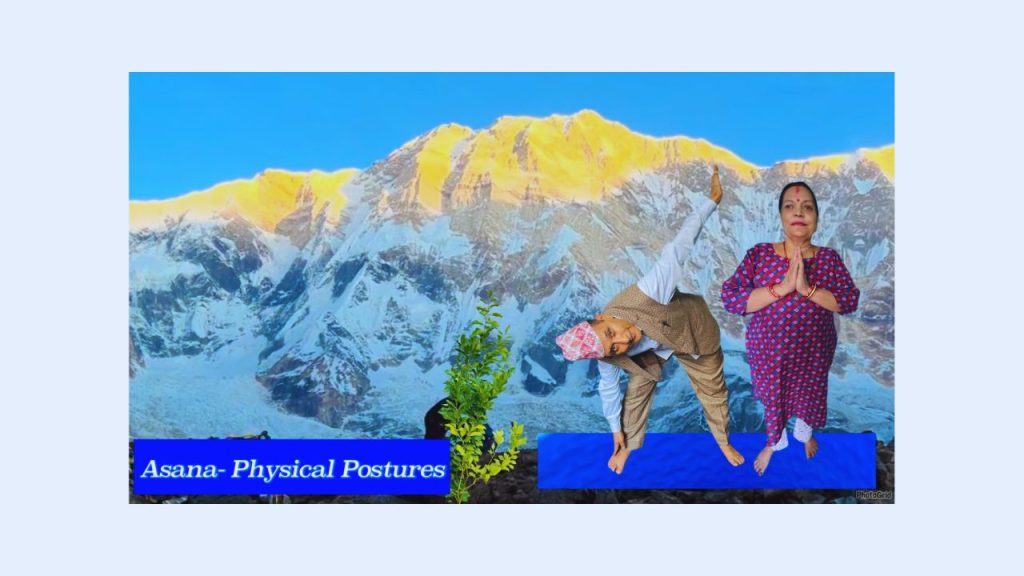
Asana is one of the eight limbs of yoga, created by the sage Patanjali. Yoga asanas are physical poses designed to improve strength, flexibility, and balance, with common examples including Tadasana (Mountain Pose), Adho Mukha Svanasana (Downward-Facing Dog), and Bhujangasana (Cobra Pose). Yoga asanas are physical poses designed to improve strength, flexibility, and balance, with common examples including Tadasana (Mountain Pose),
Adho Mukha Svanasana(Downward-Facing Dog) and Bhujangasana (Cobra Pose). These poses are often categorized by position, such as standing (Virabhadrasana), sitting (Paschimottanasana), and inverting (Sarvangasana). Regular and methodical practice of asanas has always been a tradition that has kept people healthy and happy. Even in today’s modern era, practicing yoga methodically rather than just exercising can lead to a happier and more peaceful life.
Yama – Ethical Standard: What is Yama? Yama, or ethical standard, is one of the 8 limbs of yoga as compiled by the great sage Patanjali: it is concerned with a person’s moral character and sense of integrity, which focuses on our behavior and how we conduct ourselves in life. Yama is a set of universal practices that are best associated with what we know as the Golden Rule, “Do unto others as you would have them do unto you.” It can also be called Sachcharitra
Niyama –Rules Personal Observances Patanjali’s eight limbs are the body of yoga, representing five personal practices, internal habits, and ethical guidelines for self-discipline, inner balance, and spiritual growth. They complement the yamas (external restraints) and promote a positive, inward-centered life. The five precepts are:
Saucha (Purity): Cleanliness of mind, body, and environment. When the body, mind, and environment are pure, people behave humbly and truthfully, and society becomes ideal.
Santosh (Satisfaction): Accepting the present moment and cultivating gratitude. There is also a verse in Sanskrit: Santosh is the supreme happiness. If a person’s mind is not satisfied, even if he is endowed with material comforts, it is useless.
Tapas (Self-discipline): Having a “burning enthusiasm” or willpower and patience to practice even when challenged is a human quality. If all people have this quality, not only personal but also social conduct becomes pure and ideal.
Swadhyaya (Self-study): Introspection, self-reflection, and study of sacred texts. Making a habit of collecting and studying books that you like and are beneficial to you increases self-knowledge and brings various other benefits.
Surrender to God (Samarpan): Trusting in a higher power or the universe, abandoning ego and surrendering. Surrendering to God brings one self-satisfaction and happiness through strong faith.
Pratyahara– Withdrawal of the Senses
Pratyahara is one of the limbs of Patanjali’s Ashtanga Yoga, which means “withdrawal of the senses” (prati = away/punahsthanhara = food/stimulus). It involves consciously turning the consciousness inward, detaching it from external sensory inputs – sight, sound, taste, touch, smell – to prepare the mind for deep meditation. Only when we can control and use food, sleep, touch, sound, sight, smell, etc., can we become happy and content.
Pratyahara (withdrawal of the senses): By focusing internally on the breath and energy, practitioners move away from external distractions, thereby achieving a deep meditative state
Key aspects of Pratyahara:
The analogy of the tortoise: Like a tortoise withdrawing its limbs into its shell, Pratyahara involves withdrawing the senses from external objects.
Management of “sense-food“: The senses are constantly consuming “food” (stimuli). Pratyahara is the mastery over these external influences, preventing the mind from reacting to them. It acts as a bridge between external and internal yoga practices (asana, pranayama) and internal practices (dharana, meditation, samadhi).
Benefits: It brings about mental stability, reduced reactivity, improved emotional flexibility, and deep relaxation.
Practice methods
Yoga Nidra: A guided, deep relaxation practice. It induces sleep.
Trataka: Staring at a single point, such as a candle flame. Trataka helps calm the mind.
Sensory relaxation: Practicing silence (moon) or limiting external inputs such as social media or noise. This is also known as Maunvrata.
Closing the senses: Using techniques such as Shanmukhi Mudra (gently covering the eyes, ears, nose, and mouth).
Dharana– Concentration
Dharana is a limb of the Ashtanga Yoga (eight-limbed path) created by the great sage Patanjali, representing the practice of deep concentration and focused awareness, or focusing the mind on a single object, place, or thought. It serves as a preparatory step for meditation, allowing practitioners to quiet mental chatter and practice unwavering meditation.
Key aspects of Dharana in Ashtanga Yoga:
Definition: Often translated as “concentration” or “steadying the mind”, it is defined in the Yoga Sutras (3.1) as focusing the consciousness on a single point of attention.
Purpose: It serves as a bridge between external practices (asana, pranayama) and internal meditation (dhyana), helping to move from a restless mind to a one-pointed state (ekagrah).
Ways to practice Dharana
Internal meditation: Focusing on the breath, chakras (energy centers), or mantra.
Meditation on four objects. Fixing the gaze on an object, such as a candle flame or a lamp. This controls the gaze and the brain.
Mindfulness: Actively noticing when the mind wanders and gradually bringing it back to the chosen object.
Process: While Pratyahara (withdrawal of the senses) prepares the mind, Dharana is an active effort to focus attention, which ultimately leads to an uninterrupted, flowing state of Dhyana (meditation).
Daily use: This can be practiced by focusing completely on a single task, such as walking or eating, rather than multitasking in daily life.
Dharana is not about forcing the mind to be completely still, but rather about training it to remain focused within a certain range, which ultimately leads to inner peace.
Dhyana– Meditation Meditation is one of the eight limbs of yoga as formulated by the great sage Patanjali. In Ashtanga yoga, meditation is primarily experienced as a “moving meditation” through the synchronization of breath, posture, and vision (tristhana). By maintaining intense focus on the breath and vinyasa counting, the dynamic practice becomes a meditative, flowing state that calms the mind and develops inner awareness and makes the mind calm and healthy.
Key aspects of meditation in Ashtanga
Tristhana (three-point focus): The core of the practice involves creating a focused, meditative state by combining asana (posture), ujjayi pranayama (breathing technique), and drishti (vision point).
Dynamic meditation: Instead of sitting still, Ashtanga uses a set, rhythmic series of asanas to enhance concentration, which acts as a “garland” (rosary) of asanas.
Vinyasa and counting: Each movement is linked to a specific breath, acting as a “garland” of asanas, where the internal counting acts as a mantra to deepen the meditation.
The role of meditation: Within the eight limbs, dhyana (meditation) is the seventh limb, which is achieved through the mastery of asana, pranayama, and pratyahara.
While not always presenting traditional “seated” meditation, the practice itself is designed to take the practitioner into a deep, meditative state.
Samadhi– Enlightenment or Bliss. Samadhi is one of the eight limbs of yoga as organized by Patanjali. Samadhi is a Sanskrit word that refers to a state of deep meditative concentration and absorption, often described as a state of union with the divine or a state of super-consciousness. It represents the highest level of mental stability, where the meditator, the object of meditation, and the act of meditation become one, free from ego and scattered thoughts, and the divine bliss of union with the Supreme is experienced.
Key aspects of Samadhi
Definition and etymology of Samadhi: Sama (together) It means to “bring together” or “keep together” the mind, which implies complete integration, stability, and absorption.
State of Consciousness: This is not a trance or “blackout” but a heightened state of alertness, clear awareness. In this state, the person experiences deep peace, inner joy, and the cessation of ego-driven thoughts (anger, desire).
According to Hinduism (Yoga), in Raja Yoga, it is known as the final stage of the Eightfold Path, it is absorption in the ultimate reality or self-realization.
According to Buddhism, Samadhi: It refers to one-pointedness (ekaggata) of the mind and is the final stage of the Noble Eightfold Path, necessary for the development of enlightenment.
Literal meaning (monuments) The word “samadhi” also refers to a monument or temple built over the grave of a revered saint or guru who has died a conscious, voluntary, or yogic death.
Types and experiences:
Savikalp Samadhi: Absorption with awareness of self/object.
Nirvikalpa Samadhi: The highest form of absorption, where all distinctions between subject and object dissolve.
Experiences: Practitioners may experience a sense of oneness, expansion, timelessness, and intense peace, often described as a “sweet taste” or “bliss.” Samadhi is not necessarily a permanent state, but rather a cultivated, temporary, or sustained state of enhanced mental, emotional, and spiritual awareness. It is the final limb or method of Patanjali’s Ashtanga Yoga system.
Conclusion
Ashtanga Yoga is a holistic yoga system propounded by Maharishi Patanjali, whose aim is to support and complete the physical, mental, and spiritual development of a person. “Ashtanga” means eight limbs, which are the gradual self-development and self-realization of the seeker.
Eight limbs of Ashtanga Yoga
1. Yama – Moral restraint (non-violence, truth, etc.)
2. Niyama – Personal discipline (cleanliness, contentment, etc.)
3. Asana – Making the body healthy and stable
4. Pranayama – Control of breathing
5. Pratyahara – Control of the senses
6. Manyata – Concentration
7. Dhyana – Continuous state of meditation
8. Samadhi – Being absorbed in supreme consciousness
Ashtanga Yoga is not just an exercise; it is a complete art of living a full life. It paves the way for spiritual upliftment through human conduct. Regular practice develops discipline, peace, confidence, and positivity in a person. Ultimately, the goal of Ashtanga Yoga is not external success, but actually achieving internal peace and self-realization. This is the highest result of this study.
Next Post: Yoga and meditation for students: Useful